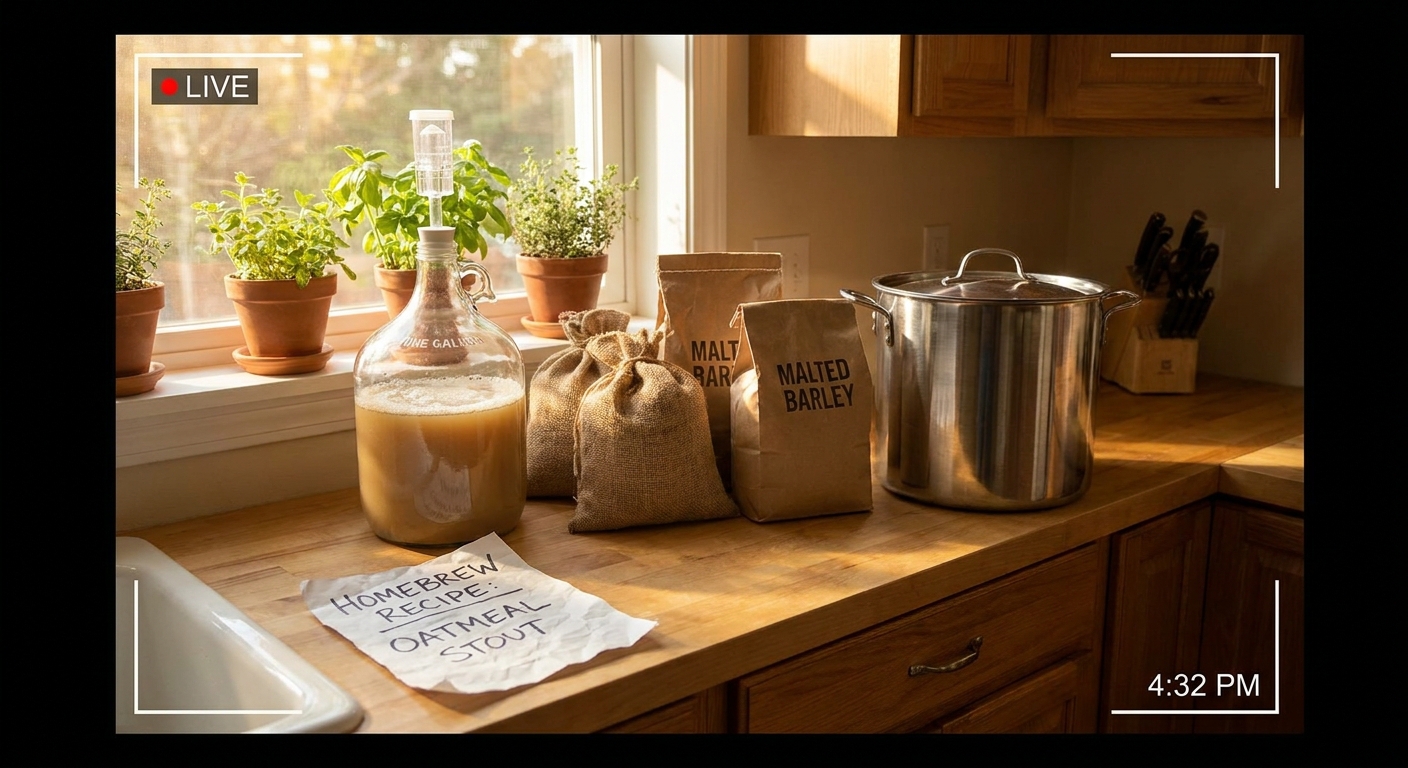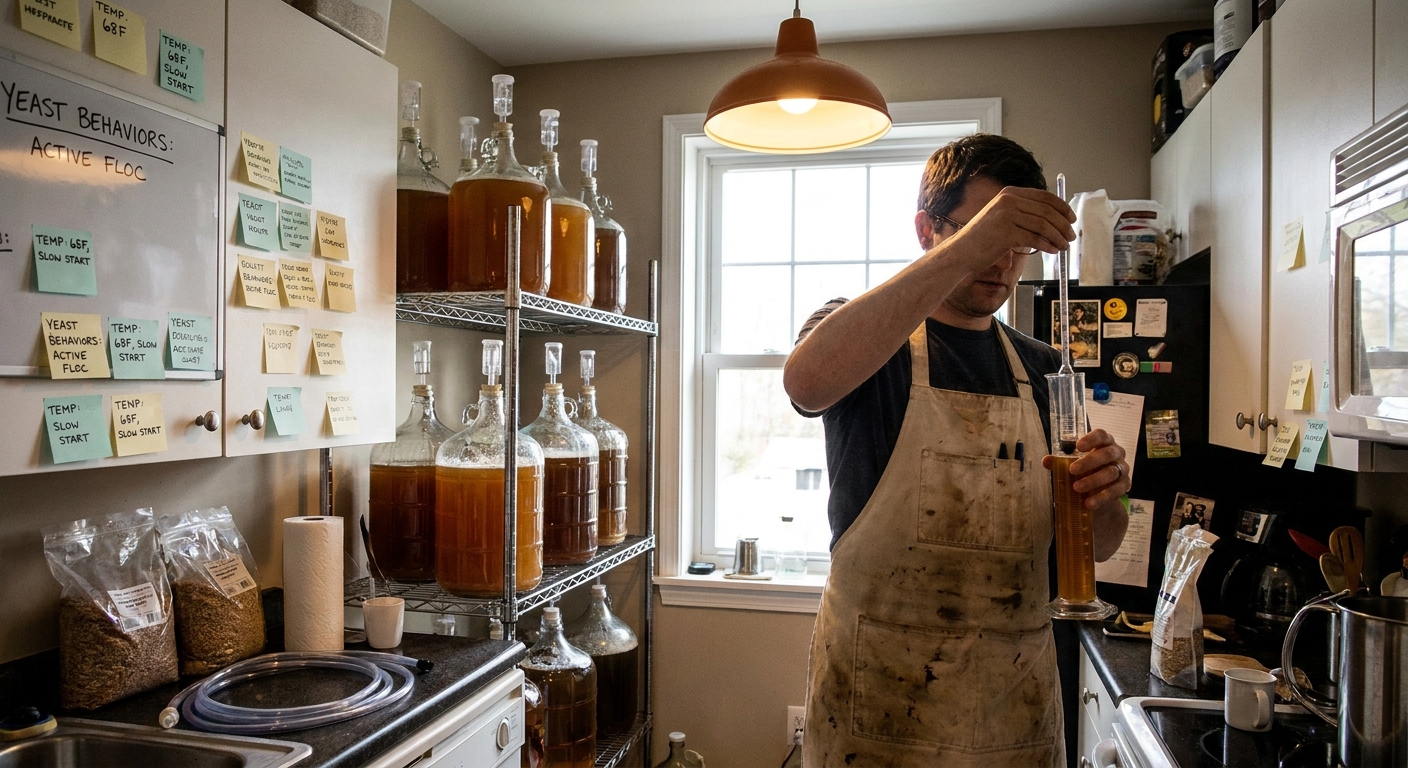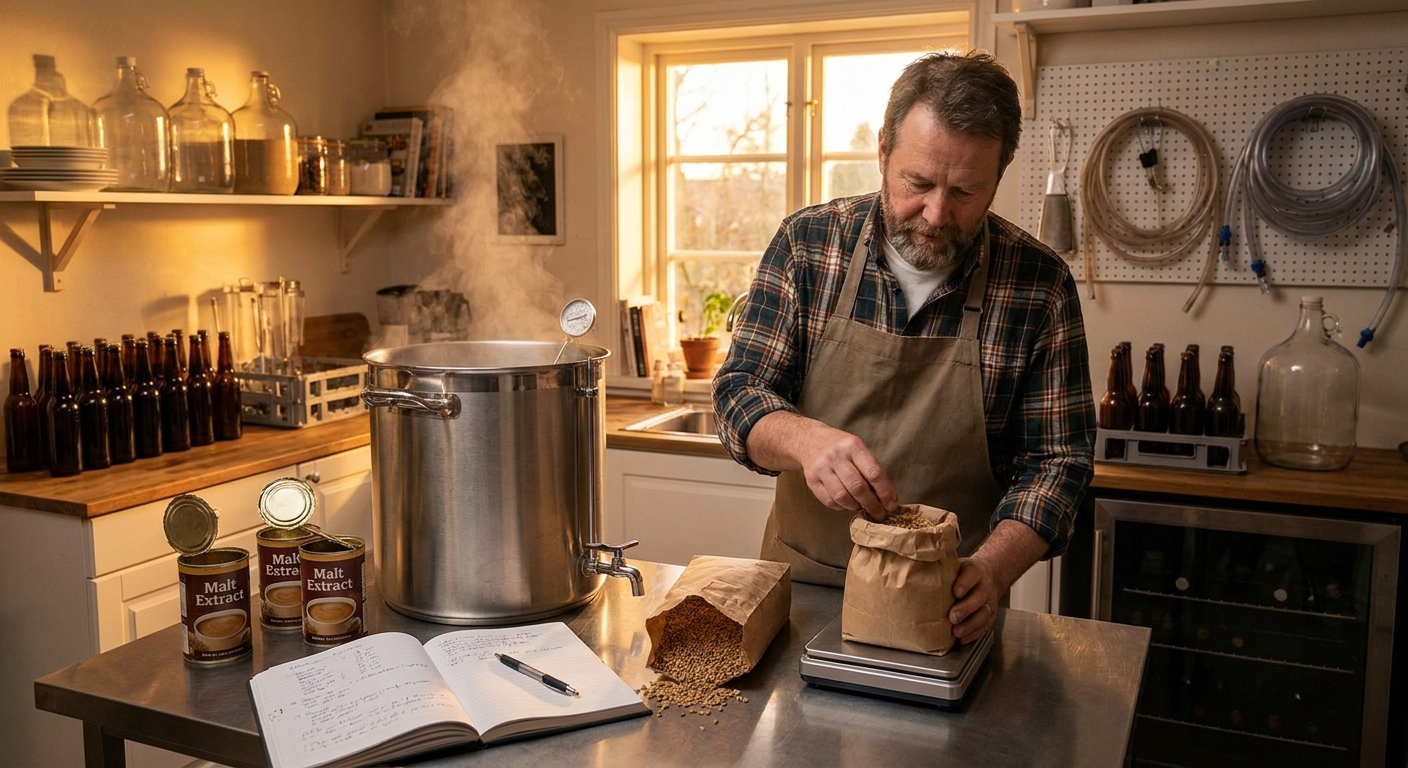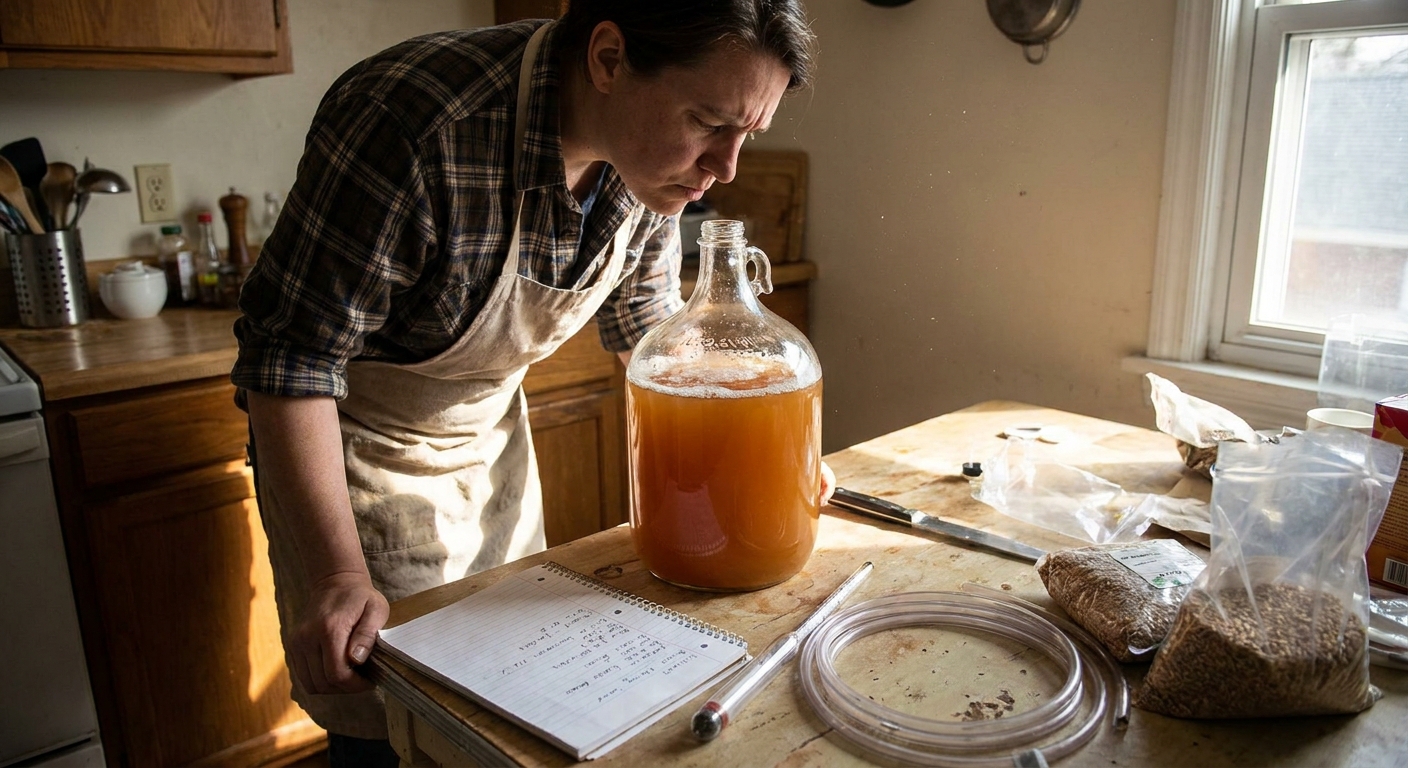
Brewing is like learning sourdough or cheesemaking: your early batches are part recipe, part science class. Off-flavors and wonky fermentations aren’t failures—they’re feedback.
Don’t Dump It Yet: Most “Bad” Beers Are Fixable or Teachable
This manual walks through the five most common beginner issues, how to diagnose them calmly, and what you can still do for the current batch. Along the way, we’ll connect each problem to what’s really happening microbiologically.
1. “My Beer Is Too Sweet and Under-Carbonated”
Symptoms
- Final beer tastes sugary or heavy.
- Carbonation is weak or flat, even after a couple of weeks.
Likely Causes
Fermentation not finished before bottling
Yeast were stressed or under-pitched
Priming sugar mismeasured
Step-by-Step Diagnosis
- Check your notes: Did you measure final gravity (FG) before bottling? Compare FG to the recipe’s target.
Check timing: Did you bottle in under 7–10 days for an ale, or under 2–3 weeks for a lager?
Check conditioning: How long have bottles sat at room temperature (18–24°C / 65–75°F)?
Microbiology Moment
If yeast go dormant early (cold temp, alcohol too high, not enough cells), they may leave unfermented sugars behind. Later, in the bottle, if they’re still weak or there are too few of them, they can struggle to carbonate.
What You Can Do for This Batch
- If it’s been less than 2 weeks in the bottle: Move bottles to a slightly warmer spot (around 22–24°C / 72–75°F) for another 7–10 days.
- If you suspect fermentation was incomplete at bottling: Chill and open a tester bottle over the sink. If it gushes, release excess carbonation from each bottle gradually over several days (crack cap, re-cap). The sweetness may be from residual sugars.
- If still flat after 3+ weeks warm: You can very carefully uncap, add a tiny amount of rehydrated fresh yeast (like a drop or two with a sanitized dropper), and re-cap. Time-consuming, but it can rescue an otherwise good beer.
Prevention for Next Time
- Always check that FG is stable over 2–3 days before bottling.
- Keep fermentation temps in range and steady.
- Use fresh yeast and pitch enough for the batch size.
2. “It Smells Like Rotten Eggs or Sulfur”
Symptoms
- Sharp sulfur/rotten egg aroma during or shortly after fermentation.
- Sometimes light, sometimes intense.
Likely Causes
- Certain yeast strains (especially lagers) naturally produce more sulfur.
- Stress from low nutrient levels or sudden temperature changes.
- In rare cases, bacterial contamination.
Step-by-Step Diagnosis
- Identify the yeast: Lager strain or some Belgian strains? Sulfur is more normal.
- Timeline: Is the smell strongest during active fermentation and fading afterward? That’s a good sign.
- Taste a small sample: If it tastes otherwise clean (no strong sourness or vinegar), it’s probably just yeast byproducts.
Microbiology Moment
Many yeast produce hydrogen sulfide (H₂S) as an intermediate byproduct. Healthy yeast with enough nutrients and time will often reabsorb or blow off these compounds.
What You Can Do for This Batch
- During fermentation: Just control temperature and wait. Don’t rack off yeast early.
- After fermentation: Give the beer a bit more time at fermentation temperature, then cold-condition for a week or two. Sulfur tends to dissipate.
- If strongly sulfuric and not improving: Gentle racking and extended cold storage may help, but severe issues can indicate stressed yeast or contamination.
Prevention for Next Time
- Use fresh yeast and adequate nutrients, especially for high-gravity or simple-sugar-heavy beers.
- Keep lager fermentations in a narrow temp band; avoid big swings.
- Give lagers a proper conditioning period.
3. “My Beer Tastes Like Green Apple, Butter, or Solvent”
These are three classic off-flavors that often stem from fermentation conditions.
A. Green Apple (Acetaldehyde)
Symptoms: Crisp, cider-like green apple aroma or fresh cut pumpkin.
Cause: Yeast haven’t fully reduced acetaldehyde to ethanol.
Fix for This Batch:
- If still in fermenter, give it another 3–5 days warm.
- If in bottles, let them sit warm for 1–3 more weeks; yeast can still clean up.
Prevention:
- Don’t rush fermentation; allow at least 10 days for average ales.
- Avoid racking off yeast too early.
B. Butter/Butterscotch (Diacetyl)
Symptoms: Movie popcorn butter, slick mouthfeel.
Cause: Yeast produce diacetyl as an intermediate; if they’re removed or chilled too soon, it stays in the beer.
Fix for This Batch:
- Perform a diacetyl rest: raise the fermenter to the high end of the yeast’s range for 2–3 days.
- For bottled beer, additional warm conditioning can reduce light diacetyl.
Prevention:
- Let the beer sit for a few days after visible activity ends.
- Use healthy, adequately pitched yeast.
C. Solvent/Nail Polish (Fusel Alcohols and Esters)
Symptoms: Alcohol “heat,” solvent-like aroma, overwhelming fruitiness.
Cause: Too warm fermentation, under-pitching, or poor oxygen management.
Fix for This Batch:
- Age the beer longer; some harshness softens with time, especially in strong beers.
- Chill well before drinking to reduce perceived heat.
Prevention:
- Control fermentation temperature meticulously.
- Pitch enough yeast for the gravity of the beer.
4. “I Think It’s Infected: Is This Normal?”
What Fermentation Should Look Like
- Creamy, tan, or white krausen (foam)
- Bubbles and CO₂, maybe some floating bits of hop debris or yeast
- A ring of dried krausen around the carboy after activity subsides
What Often Gets Mistaken for Infection
- Yeast rafts: Clumps floating on the surface—usually harmless.
- CO₂ bubbles carrying yeast/hops: Looks messy but normal.
Red Flags for Possible Infection
- Pellicle: Thin, white film with bubbles or powdery islands on the surface, often associated with wild yeast or bacteria.
- Stringy, ropey beer when poured.
- Strong vinegar (acetic) aroma or aggressive sourness when not intended.
Microbiology Moment
Acetobacter and other aerobic bacteria thrive with oxygen access, converting ethanol to acetic acid (vinegar). Lactobacillus and Pediococcus can create sourness and, in some cases, ropiness.
What You Can Do for This Batch
- Mild tartness with no visible growth: You may have a low-level lactic infection. If it tastes pleasant, you’ve accidentally made a light sour—just keep it cold and drink it sooner.
- Strong vinegar or pellicle: It’s likely a full-blown infection. You can taste a small sample; if it’s undrinkable, this batch may be a loss.
Prevention for Next Time
- Improve cleaning and sanitation, particularly on cold-side equipment (siphons, fermenters, bottling gear).
- Replace scratched plastic buckets or hoses that can harbor microbes.
- Minimize oxygen exposure after fermentation (tight seals, careful transfers).
5. “My Beer Is Cloudy or Has Weird Sediment”
Symptoms
- Hazy beer when you expected clear.
- Lots of sediment in bottles.
- Possible chunky floaties.
Likely Causes
- Normal yeast flocculation and bottle conditioning.
- Chill haze (proteins and polyphenols forming complexes at cold temps).
- Incomplete hot or cold break in the boil and chill.
Step-by-Step Diagnosis
Is it cloudy warm and cold, or mostly when cold?
- Only cloudy cold: likely chill haze. - Cloudy all the time: yeast still in suspension or starch haze.
How old is the beer?
- Young beers often clear over a few extra weeks.
Microbiology Moment
Yeast flocculation is strain-dependent; some strains (English ales) drop bright quickly, others (wheat beer, some Belgian strains) are naturally cloudy. Chill haze is more of a protein-polyphenol chemistry issue than microbiology, but it interacts with yeast behavior and cold storage.
What You Can Do for This Batch
- Give the beer more time cold; many hazes drop with 1–3 weeks of cold conditioning.
- Pour carefully from bottles, leaving the sediment behind.
- If the flavor is fine, cloudiness is mostly aesthetic.
Prevention for Next Time
- Ensure a strong boil and good hot break (foam and protein clumps early in the boil).
- Chill wort quickly after the boil to encourage cold break.
- Use finings (Irish moss in the boil, or gelatin in the fermenter) if you want clearer beers.
A Calm Brewing Checklist to Prevent the Big Five Problems
Before every brew day, run through this quick list:
Sanitation ready?
- No-rinse sanitizer mixed and gear cleaned? - Any old hoses or scratched plastic that should be replaced?
Yeast prepared?
- Fresh packet, stored cool and dry? - Starter made if using liquid yeast for higher-gravity beers?
Fermentation temperature plan?
- Where will the fermenter sit? - Do you need a water bath, swamp cooler, or temperature controller?
Patience built into your schedule?
- At least 10–14 days in primary for ales, longer for lagers or strong beers. - 2–3 weeks for bottle conditioning before heavy judgment.
Notes notebook ready?
- Date, recipe, OG, yeast, temperatures—this will turn mysteries into clear lessons.
When in Doubt, Wait a Week and Re-Taste
Yeast are quietly working long after the airlock calms down. Many off-flavors soften, disappear, or mellow with time. Before you dump a batch, give it time and take another small, honest taste.
Every problematic beer is a page in your personal fermentation textbook. With patient observation and a few gentle course corrections, your “mistakes” become the teachers that lead you to reliably good, then great, homebrew.