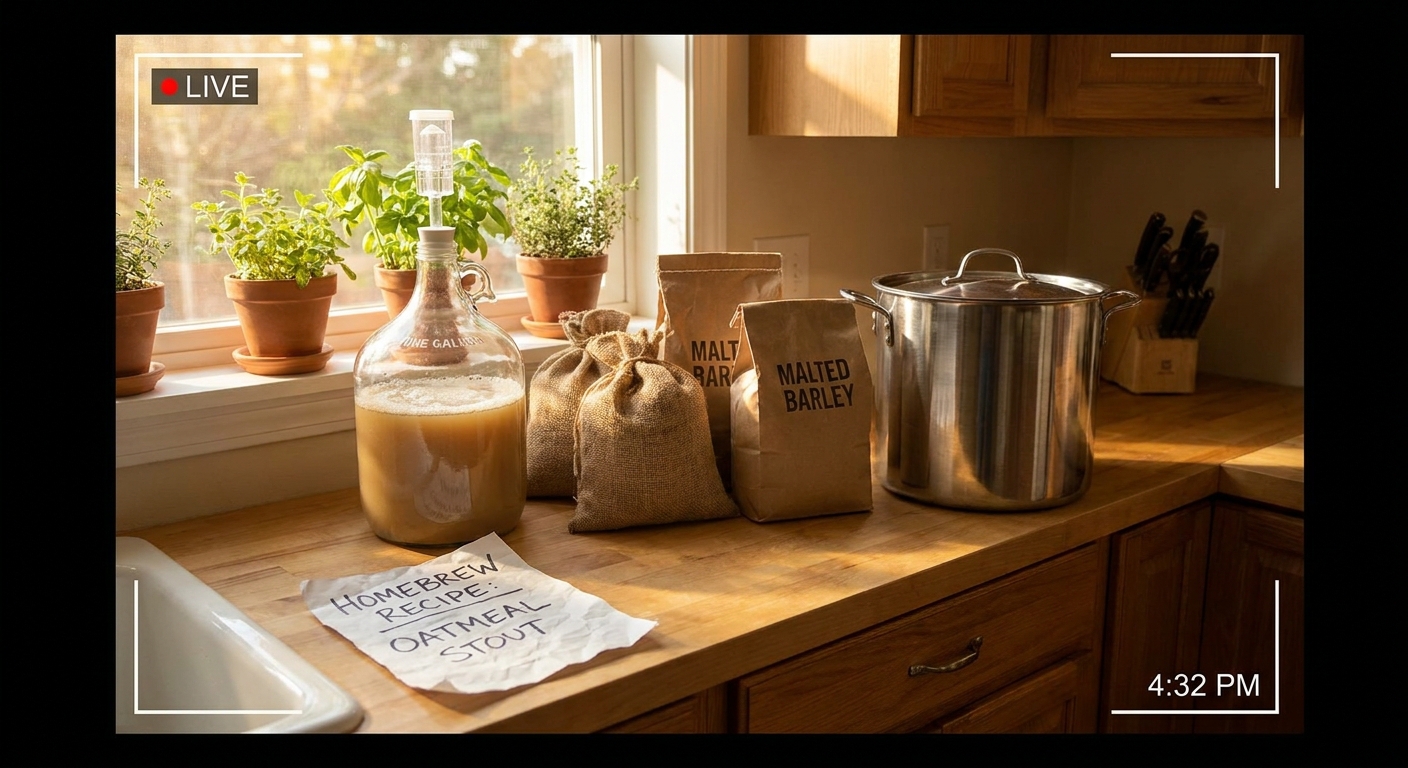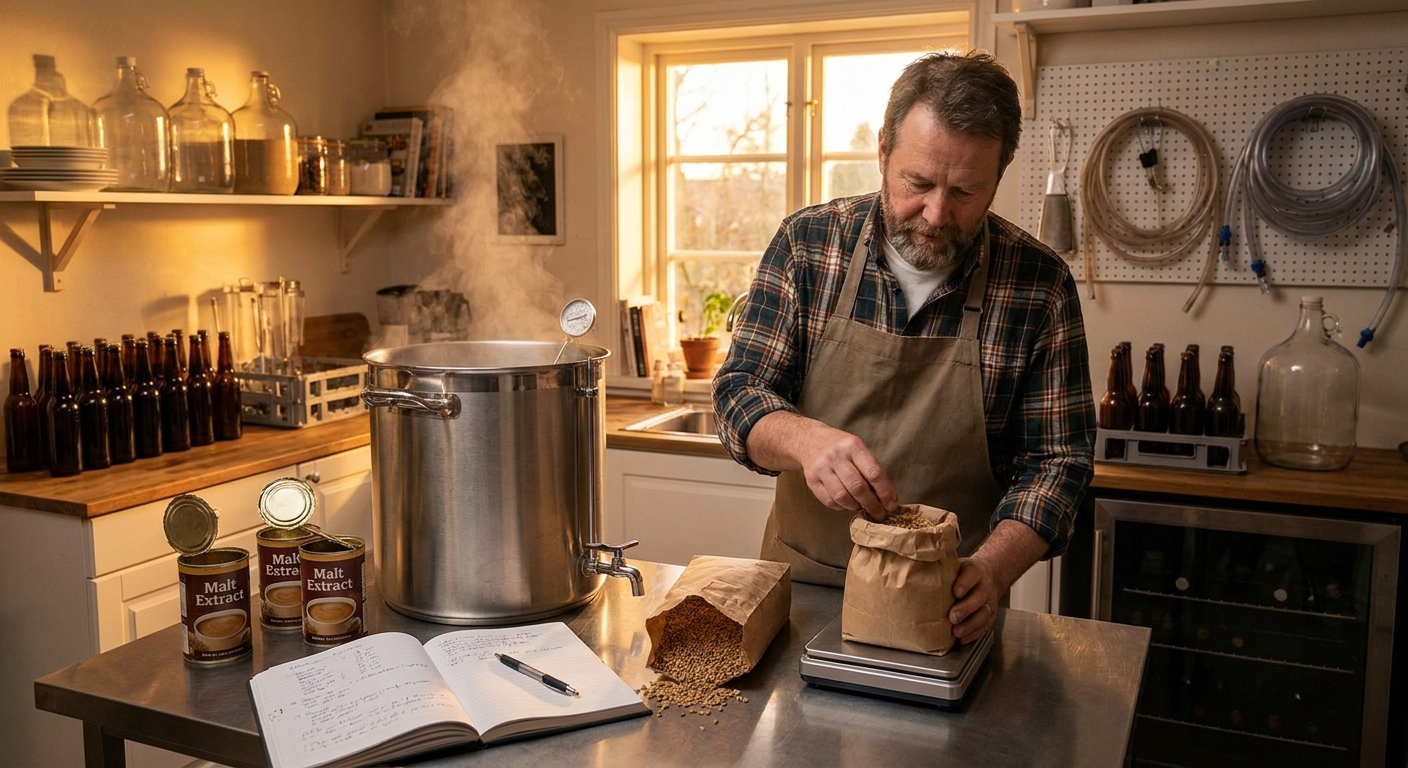
Every homebrewer eventually stands at a familiar fork in the road: keep brewing with malt extract or switch to all-grain. Both roads can lead to excellent beer. The real question is which fits your space, schedule, and temperament right now.
Two Roads to the Same Pint
We’ll walk through the processes side by side, dig into the microbiology (which is more similar than you might think), and give you hands-on decision points so you can choose with confidence.
What’s the Actual Difference?
Malt extract brewing uses concentrated wort (liquid or dry) made by a professional maltster. You dilute, boil, hop, cool, and ferment.
All-grain brewing starts from crushed malted grains. You perform the mash yourself (converting grain starches into fermentable sugars), then lauter, boil, cool, and ferment.
From the yeast’s perspective, both methods produce a sugar-rich wort to ferment. The big differences for you are:
- Time required
- Equipment needed
- Control over fermentability and flavor
Side-by-Side: Process Overview and Timing
Malt Extract (Partial-Boil or Full-Boil)
Total brew day: ~2.5–3.5 hours
- Heat water.
- Add extract (and possibly steeped specialty grains).
- Boil with hops (60 minutes typical).
- Cool, transfer, pitch yeast.
- Ferment and package as usual.
All-Grain (Single-Infusion Mash)
Total brew day: ~4.5–6 hours
- Heat strike water.
- Mash crushed grains (60 minutes typical).
- Lauter and sparge (45–90 minutes).
- Boil with hops (60–90 minutes).
- Cool, transfer, pitch yeast.
- Ferment and package as usual.
You can think of malt extract as “outsourcing the mash” to a maltster.
Flavor and Fermentability: What Changes for the Yeast?
Wort Composition
- All-grain: You directly control mash temperature and water-to-grain ratio, which affect the sugar profile—more fermentable (drier) or less fermentable (fuller).
- Extract: The maltster has already made those decisions; you get a reasonably balanced wort profile.
Microbiology Moment: Enzymes vs. No Enzymes
In all-grain brewing, mash enzymes (alpha- and beta-amylase) convert starches to sugars. Temperature determines which enzyme dominates:
- 62–65°C (144–149°F): Beta-amylase favors more fermentable wort (drier beer).
- 66–69°C (151–156°F): Alpha-amylase creates more dextrins and body (fuller beer).
With malt extract, this phase has already happened. The yeast just see ready-made sugars.
Equipment: What You Actually Need
Malt Extract Setup
- Medium to large boiling pot (8–12 quarts / 8–12 L)
- Fermenter, airlock, siphon, bottles
- Optional: Smaller pot for steeping specialty grains
- Standard kitchen stove is usually enough
All-Grain Setup (Batch Sparge or BIAB)
Minimum for Brew-in-a-Bag (BIAB):
- Large kettle (at least 8 gallons / 30 L for 5-gallon batches)
- Large mesh bag for grains
- Heat source strong enough to handle full-volume boils
- Fermenter, airlock, siphon, etc.
For traditional mash tun systems:
- Mash tun with false bottom or manifold (often a converted cooler)
- Hot liquor tank (or another vessel for hot water)
- Larger boil kettle and burner
If your kitchen is small or your landlord frowns at big burners, extract gives you less to negotiate.
Hands-On Comparison: Brewing the Same Style Two Ways
Let’s use an American Pale Ale as our test case.
Recipe Snapshot
Target: 5 gallons (19 L), OG ~1.050, moderate bitterness
Extract Version
- 3.0 kg (6.6 lb) light liquid malt extract
- 0.23 kg (0.5 lb) crystal 40 malt (steeped)
- 28 g (1 oz) Cascade hops @ 60 min
- 14 g (0.5 oz) Cascade @ 15 min
- 28 g (1 oz) Cascade flame-out
- 1 pack American ale yeast (US-05 or similar)
Key Steps:
- Steep crystal malt in ~3 L (3 qt) water at 68–71°C (155–160°F) for 20–30 min.
- Remove grains, add water and extract, bring to boil.
- Add hops per schedule, cool, top up to 5 gal, pitch yeast.
All-Grain Version
- 4.1 kg (9 lb) 2-row pale malt
- 0.45 kg (1 lb) crystal 40
- Same hop schedule
- Same yeast
Key Steps:
- Heat strike water and mash grains at ~66–67°C (151–153°F) for 60 min.
- Vorlauf (recirculate) and lauter.
- Sparge with hot water to reach pre-boil volume.
- Boil with hops, cool, pitch.
Result Differences
- Extract: Slightly more caramel-forward, maybe a touch darker if you add all extract at start of boil (you can add half late to lighten).
- All-grain: Finer control over body, dryness, and color. Possible subtle grain complexity.
For most casual tasters, both will absolutely drink as “real” pale ale.
Troubleshooting: Unique Risks of Each Method
Typical Extract Issues
Dark, "Cooked" Flavor or Color
- Cause: High-concentration boil scorching, adding all extract at start. - Fix: Remove pot from heat before adding extract; stir thoroughly. Try late extract addition: add 70% at start, 30% in last 10–15 minutes.
Limited Fermentability (Sweet Beer)
- Cause: Extract recipe plus lots of crystal malts. - Fix: Use less crystal; choose a more attenuative yeast; ensure proper fermentation temperature.
Stale Extract Twang
- Cause: Old or poorly stored extract. - Fix: Buy extract from suppliers with fast turnover; prefer dry extract for longer shelf life.
Typical All-Grain Issues
Low Efficiency (Low OG)
- Cause: Too coarse crush, short mash, poor sparge technique. - Fix: Mash 60–75 minutes, stir well, check crush; for BIAB, squeeze bag gently to maximize yield.
Starch Haze
- Cause: Mash too hot or too short; incomplete conversion. - Fix: Verify full conversion with an iodine test; aim for stable mash temps.
Stuck Sparge
- Cause: Too fine crush, lots of husk-less adjuncts (wheat, rye), poor lautering design. - Fix: Add rice hulls to the grain bill, stir and re-vorlauf, avoid crushing to flour.
Cost, Time, and Learning Curve
Ingredient Cost per Batch (Approximate, 5 gal)
- Extract: Higher per batch, fewer pieces of equipment.
- All-grain: Slightly cheaper ingredients, but more gear up front.
Time Investment
- Extract brew day: Great for weeknights or quick weekend sessions.
- All-grain brew day: Best as a dedicated half-day project.
Learning Curve
- Extract: Faster gratification; focus on fermentation control, yeast health, and sanitation.
- All-grain: Adds water chemistry, mash schedules, and lauter methods.
A Simple Decision Framework
Ask yourself these questions:
How much time can I realistically set aside for brew days?
- If 3 hours is your normal max → Extract is your friend. - If you enjoy long kitchen projects (like making stock or canning) → All-grain will feel natural.
What is my brewing goal for the next 6–12 months?
- Learning fermentation control and yeast behavior? → Extract first. - Tweaking body, dryness, and color precisely? → All-grain.
How much space and equipment can I store?
- Apartment kitchen, small stove, limited storage → Extract with partial boils. - Garage or yard with burner and large kettles → All-grain is easier to accommodate.
Do I like tinkering with variables?
- If yes, all-grain will give you knobs to turn (mash temp, water adjustments, grain selections). - If you prefer consistency and simple routines, extract is refreshingly straightforward.
Hybrid Options: The Gentle Bridges
You don’t have to jump from pure extract to full all-grain in one leap. Consider:
- Partial Mash: Replace part of the extract with a small all-grain mash (using 1–2 kg / 2–4 lb of grain in a smaller pot).
- BIAB in Smaller Batches: Try 2–3 gallon all-grain batches with brew-in-a-bag, using your existing stove.
These hybrids teach you mash basics without demanding a brewery-sized setup.
Yeast’s Eye View: What’s Constant Either Way
No matter which path you choose, yeast still need:
- Oxygen at pitching (for healthy cell membranes).
- Controlled fermentation temperature to shape flavors.
- Adequate pitching rates and good health.
- Time to ferment, clean up, and condition.
Get those fundamentals right, and both extract and all-grain beers can shine.
The Patient Brewer’s Recommendation
If you’re newer to homebrewing or your schedule is tight, start with malt extract plus steeping grains for several batches. Focus on:
- Consistent sanitation
- Fermentation temperature control
- Yeast choice and health
Once those feel routine, treat yourself to an all-grain day as a fun project. You’re not abandoning one method for the other; you’re simply adding another technique to your brewing toolbox.
Good beer is possible on both roads. Choose the one that fits comfortably into your life now, and let your curiosity lead you to the next step when you’re ready.