Starter cultures are living things, but that doesn’t mean they need to run your schedule. With a bit of planning, you can keep yogurt, kefir, sourdough, and vegetable ferments going smoothly—even on busy weeks.
Fermentation That Fits Your Life
This guide gives you realistic timelines, sample weekly schedules, and microbiology‑based tips so you can coordinate multiple ferments without overwhelm.
Understanding Fermentation Speed: The Three Big Levers
Every starter culture responds to the same three variables:
- Temperature – warmer = faster, cooler = slower.
- Food Supply – more fresh milk/flour/sugars = more activity.
- Inoculation Rate – how much starter you add to a batch.
Once you understand these, you can stretch or compress your fermentation timelines to fit your days.
Typical Starter Culture Timelines at a Glance
Assuming room temperature around 20–22°C (68–72°F):
- Yogurt: 6–12 hours (warm incubation)
- Milk kefir: 12–36 hours
- Sourdough starter (mature, at room temp): 4–12 hours to peak after feeding
- Basic vegetable ferment (with starter brine): 3–10 days at room temp, then weeks to months in the fridge
We’ll turn these into concrete schedules next.
Daily or Near‑Daily Ferments: Kefir and Sourdough
Milk Kefir: A 24‑Hour Rhythm
Microbiology in brief:
Kefir grains contain lactic acid bacteria + yeasts. They consume lactose, producing acid, CO₂, and a bit of alcohol. At room temp, they’re usually happiest on a once‑a‑day cycle.
Basic 24‑Hour Kefir Schedule:
- Morning or Evening (Pick One Time and Stick to It):
- Strain yesterday’s kefir.
- Move finished kefir to the fridge.
- Add fresh milk to grains and set at room temp.
That’s it: 5–10 minutes per day.
If You Need to Slow Down:
- Put grains in fresh milk and store in the fridge.
- Change the milk at least once per week.
- When ready to resume daily kefir, give them 1–3 room‑temp cycles to wake up.
Sourdough: Choosing Room‑Temp vs. Fridge Maintenance
Microbiology in brief:
Yeasts and lactic acid bacteria feast on flour starches, producing CO₂ and acids. They work faster when warm and well‑fed.
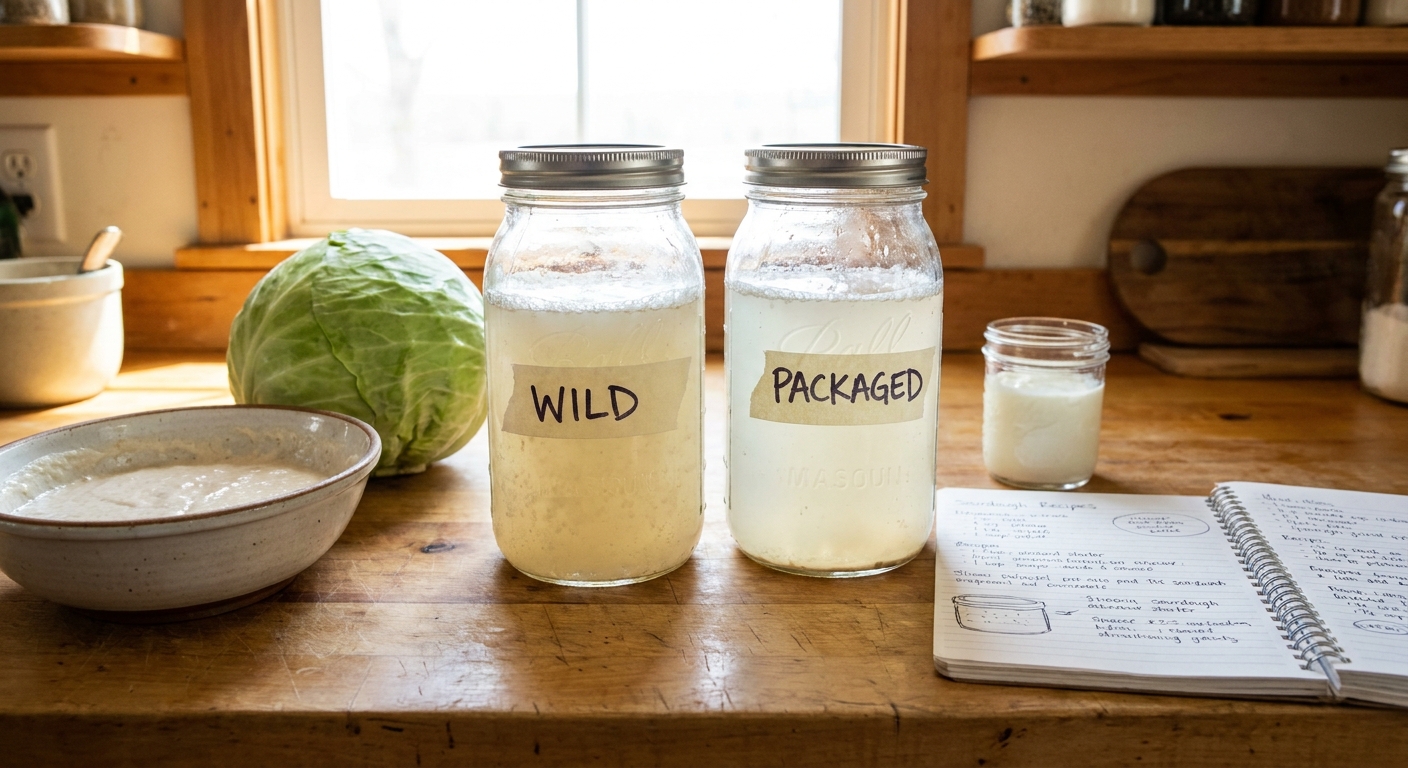
Option A: Room‑Temperature Starter (Frequent Baking)
Feed every 12–24 hours.
Sample Schedule (Feed 1x Per Day):
- Evening:
- Discard most of the starter, keeping about 20–30 g (1–2 tablespoons).
- Feed with 50 g water + 50 g flour (adjust amounts as desired).
- Keep at room temperature.
- Morning:
- Starter is near peak; you can mix dough or wait until evening to feed again.
Option B: Fridge Starter (Once‑a‑Week Baking)
Feed once per week, bake on feeding days.
Weekly Routine:
- Night Before Baking:
- Take starter from the fridge.
- Feed and leave at room temp overnight.
- Next Day:
- Use some for your dough when it’s at or near peak.
- Feed the remaining starter, let it bubble for 1–2 hours, then return to fridge.
Batch Ferments: Yogurt and Vegetables
Yogurt: Set It and Chill
Microbiology in brief:
Thermophilic bacteria (S. thermophilus and L. bulgaricus and friends) like 40–45°C (104–113°F). At that temp, they acidify and thicken milk in 6–12 hours.
Easy Weekend Yogurt Rhythm:
- Saturday Afternoon:
- Heat milk to 82–85°C (180–185°F), cool to ~43°C (110°F).
- Stir in yogurt starter.
- Incubate.
- Saturday Night or Sunday Morning (6–10 hours later):
- Move thickened yogurt to the fridge.
Reusing Starter:
- Save 1–2 tablespoons of this batch to start next week’s yogurt.
- Most cultures re‑culture well for 4–10 generations before weakening; then start with a fresh commercial culture again.
Vegetable Ferments: Slow But Flexible
Microbiology in brief:
Lactic acid bacteria slowly dominate a salted vegetable environment. With a bit of starter brine, they get a head start.
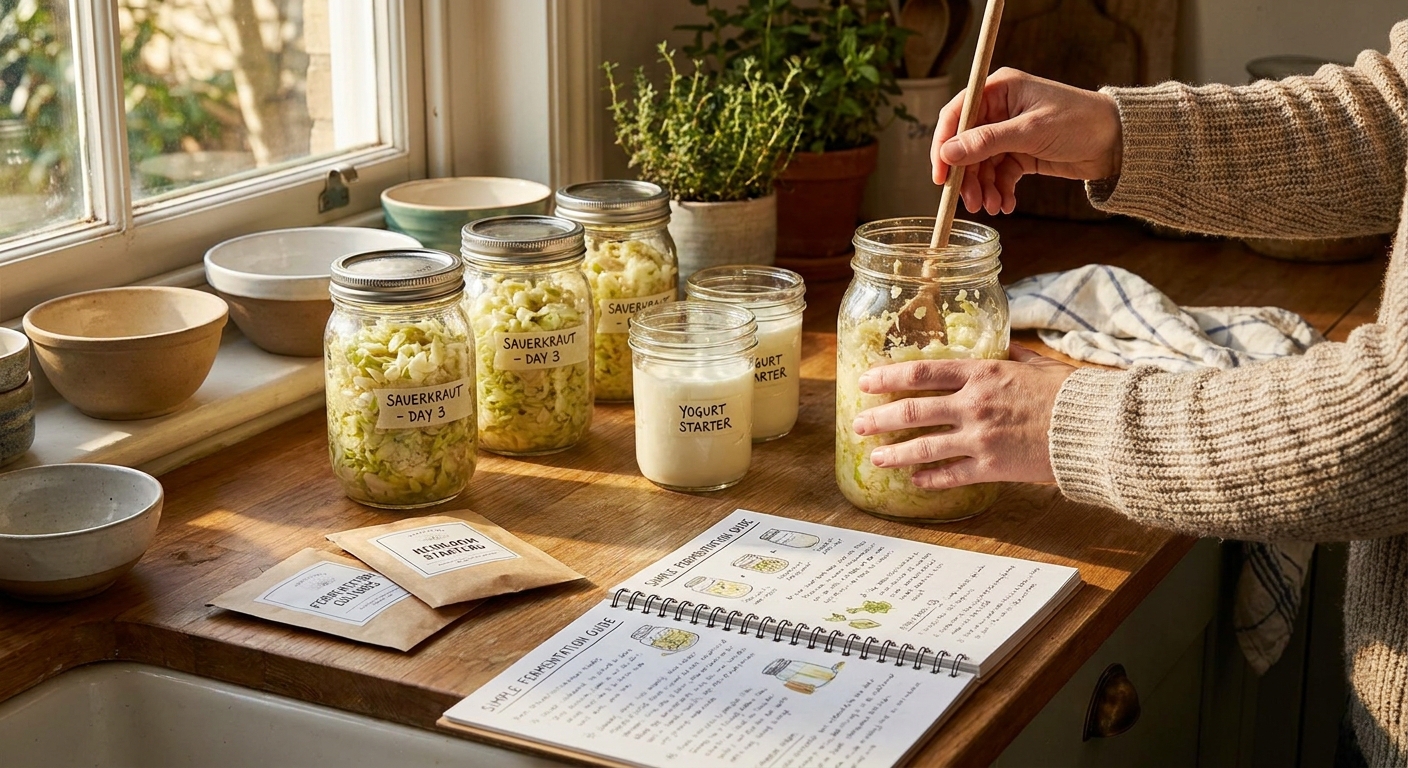
Starter‑Assisted Veggie Ferment Example (Sauerkraut):
- Day 1 (15–30 minutes):
- Shred cabbage and mix with 2–2.5% salt.
- Massage until brine forms.
- Add 2–4 tablespoons of active brine or whey if desired.
- Pack into jar, submerge completely.
- Days 2–7:
- Check daily: push veggies under brine, watch for bubbles. Taste starting day 3.
- Day 5–14:
- When flavor is where you like it, move to the fridge.
In the fridge, fermentation slows to a crawl. You can then enjoy the batch over weeks to months without extra work.
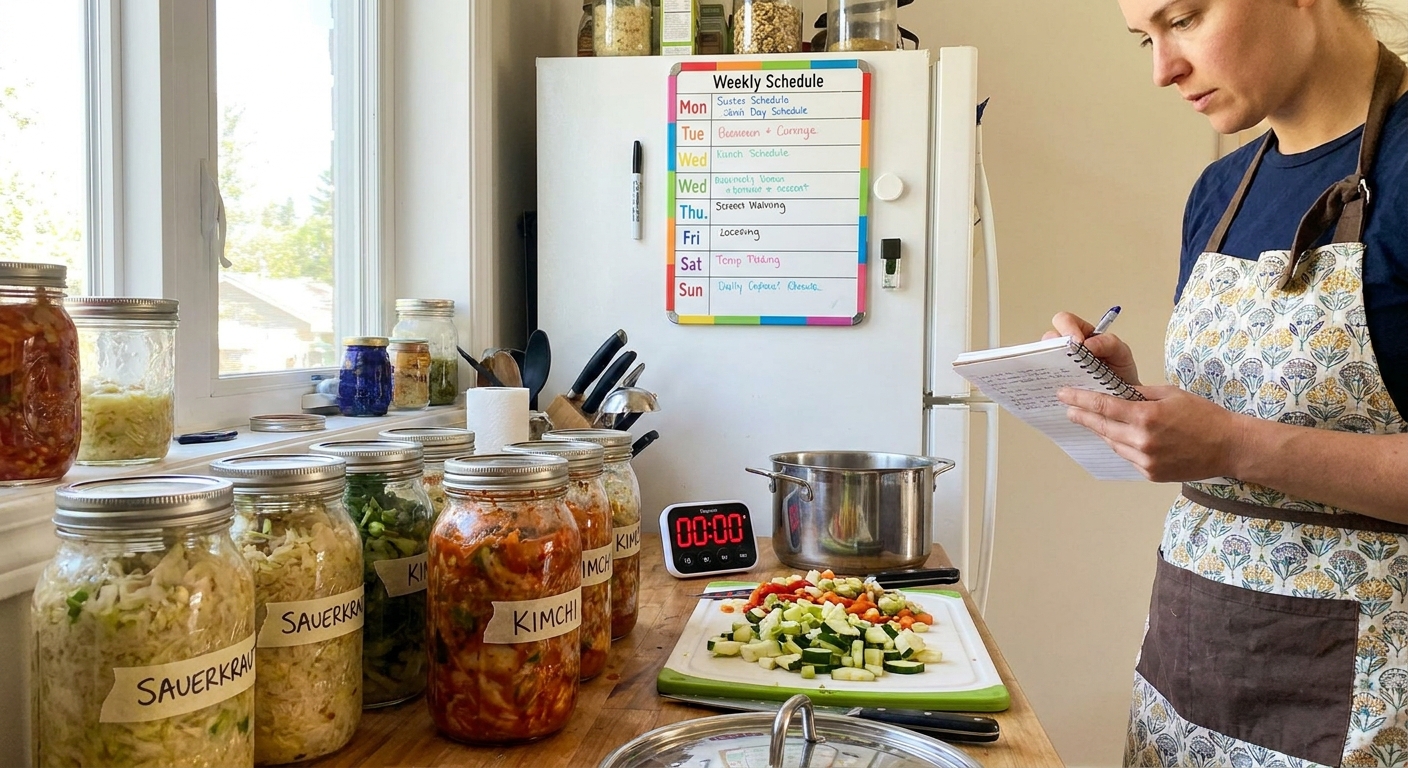
Sample Weekly Schedule: Juggling Four Starters
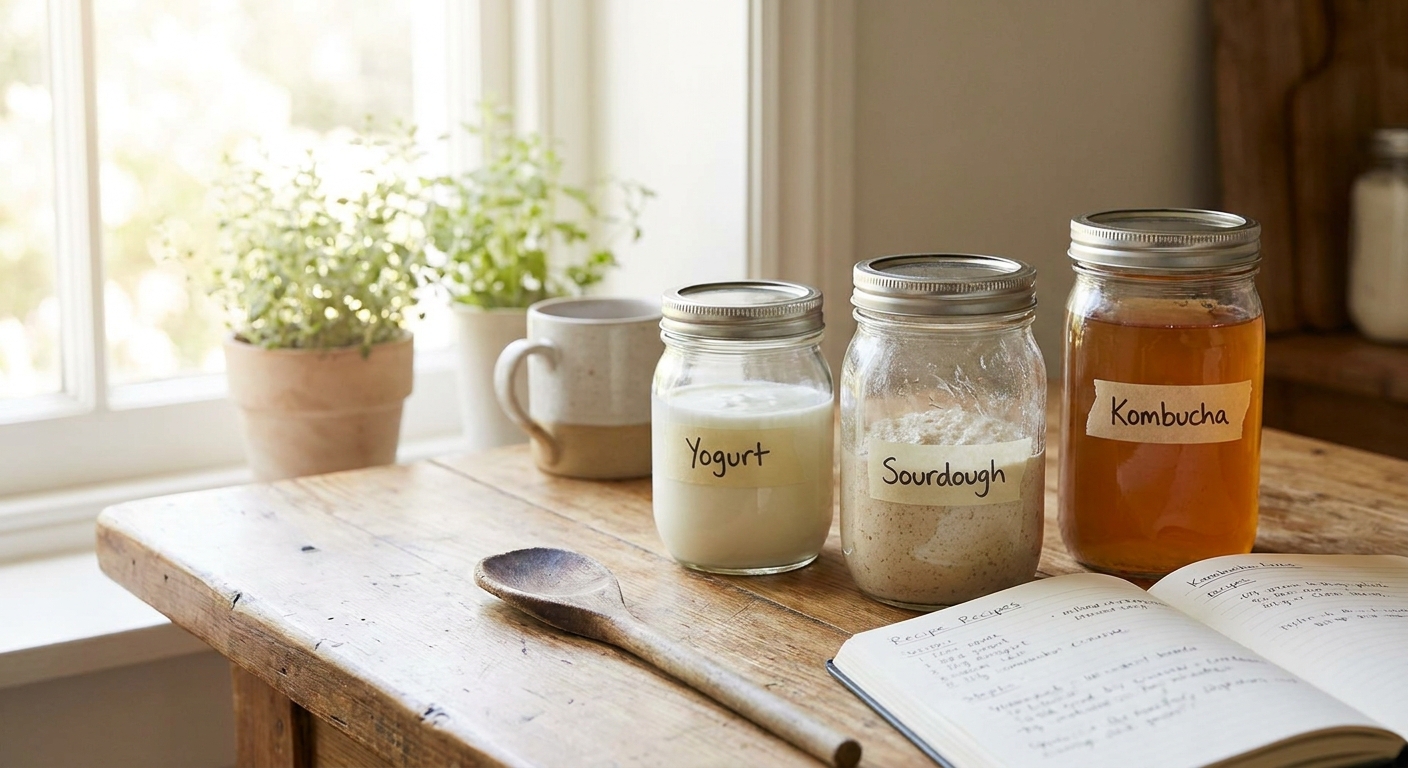
Let’s say you want: kefir, yogurt, sourdough bread once a week, and a jar of kraut on hand.
Assumptions
- You work weekdays, have more time on weekends.
- Room temp ~21°C (70°F).
Your Cultures
- Kefir grains – daily
- Sourdough starter – fridge‑kept, weekly bakes
- Yogurt starter – weekly
- Veggie brine – starter from last batch of kraut
Example Schedule
Sunday
- Morning:
- Strain kefir, feed grains (everyday task).
- Take sourdough from fridge, feed, leave at room temp.
- Afternoon:
- Mix and knead sourdough dough.
- Shape and proof as your recipe requires.
- Evening:
- Bake bread.
- Feed remaining sourdough starter once more, then return to fridge.
- Start a new batch of yogurt (heat milk, inoculate, incubate overnight).
- Morning:
- Strain kefir, feed grains.
- Move set yogurt to fridge.
- Daily:
- Strain kefir, feed grains.
- One evening (your choice, maybe Wednesday):
- Shred cabbage or other veggies, start a new kraut using a few spoonfuls of brine from your current jar.
- Daily:
- Strain kefir, feed grains.
- Quick check on kraut:
- Taste, push veg under brine, decide whether to move to fridge or leave out a few more days.
Monday
Tuesday–Friday
Saturday
Total active time most days: 5–15 minutes. Heaviest load: Sunday (bread + yogurt), but still manageable as a relaxed kitchen afternoon.
Adjusting Ferments to Your Schedule Using Microbiology
Here’s how to use the three levers (temperature, food, inoculation) in practice:
1. Use the Fridge as a “Pause Button”
- Kefir grains: fridge slows them so you can skip a few days.
- Sourdough starter: fridge turns daily feedings into weekly ones.
- Veggie ferments: fridge halts souring where you like it.
Lower temperatures slow down the metabolic rate of LAB and yeast, giving you more flexibility.
2. Change Inoculation Amount
- More starter → faster ferment.
- Example: use more sourdough starter in a bread dough if you need a quicker rise.
- Less starter → slower ferment.
- Example: use less kefir grains per volume of milk to extend fermentation time.
3. Adjust Feeding Frequency
- Hungry cultures (rarely fed) produce more acetic acid and solvent‑like smells.
- Well‑fed cultures give milder acidity and more predictable behavior.
Balance feeding so:
- They’re active enough for your needs.
- You’re not throwing away more starter than you’re comfortable with.
Common Scheduling Problems and Fixes
“I Forgot to Feed My Sourdough for 2 Weeks”
What to Do:
- Open and smell: if it’s not moldy or putrid, you can try revival.
- Pour off any dark liquid (hooch) if you want milder flavor.
- Keep a small portion (1–2 tablespoons), feed 1:4:4 (starter:flour:water by weight).
- Repeat daily at room temp for 3–5 days and watch for revival.
- If mold or odd colors appear, discard and start over.
“My Kefir is Fermenting Too Fast”
What to Do:
- Move the jar to a cooler room.
- Reduce the amount of grains or increase the milk volume.
- Strain sooner (at 12–18 hours instead of 24+).
“My Yogurt Always Finishes While I’m Asleep or at Work”
What to Do:
- Incubate while you’re awake (e.g., Saturday afternoon–evening).
- Or once it reaches your desired thickness, you can turn off the heat and leave it in the incubator for a few more hours before refrigerating—it will slowly cool and not over‑ferment quickly.
“My Veggie Ferments Always Get Too Sour Before I Can Eat Them”
What to Do:
- Move them to the fridge earlier, even if they’re lightly sour.
- Start smaller jars so you finish them before they over‑sour.
- In hot climates, use a cooler or basement area for primary fermentation.
Designing Your Own Fermentation Routine
To build a sustainable routine:
- List the ferments you want active.
- Daily: kefir or kombucha.
- Weekly: sourdough bread, yogurt.
- Monthly: batches of kraut or pickles.
- Assign Them “Slots.”
- Morning tasks: quick strains/feeds (kefir).
- Evening tasks: feeding starter, starting dough, packing veggies.
- Weekend tasks: yogurt and big veg projects.
- Note Ideal and Minimum Attention.
- Kefir: ideally daily, can rest in fridge a week.
- Sourdough: weekly feed in fridge.
- Yogurt: batch once a week or every two weeks.
- Veggies: active phase (3–10 days), then low maintenance.
- Adjust with Temperature & Fridge as Needed.
Remember: these cultures are robust. They don’t demand perfection—just roughly regular care.
By understanding their rhythms and the science behind their speed, you can let fermentation enhance your life instead of dominate it, keeping jars happily bubbling in the background while you get on with your week.