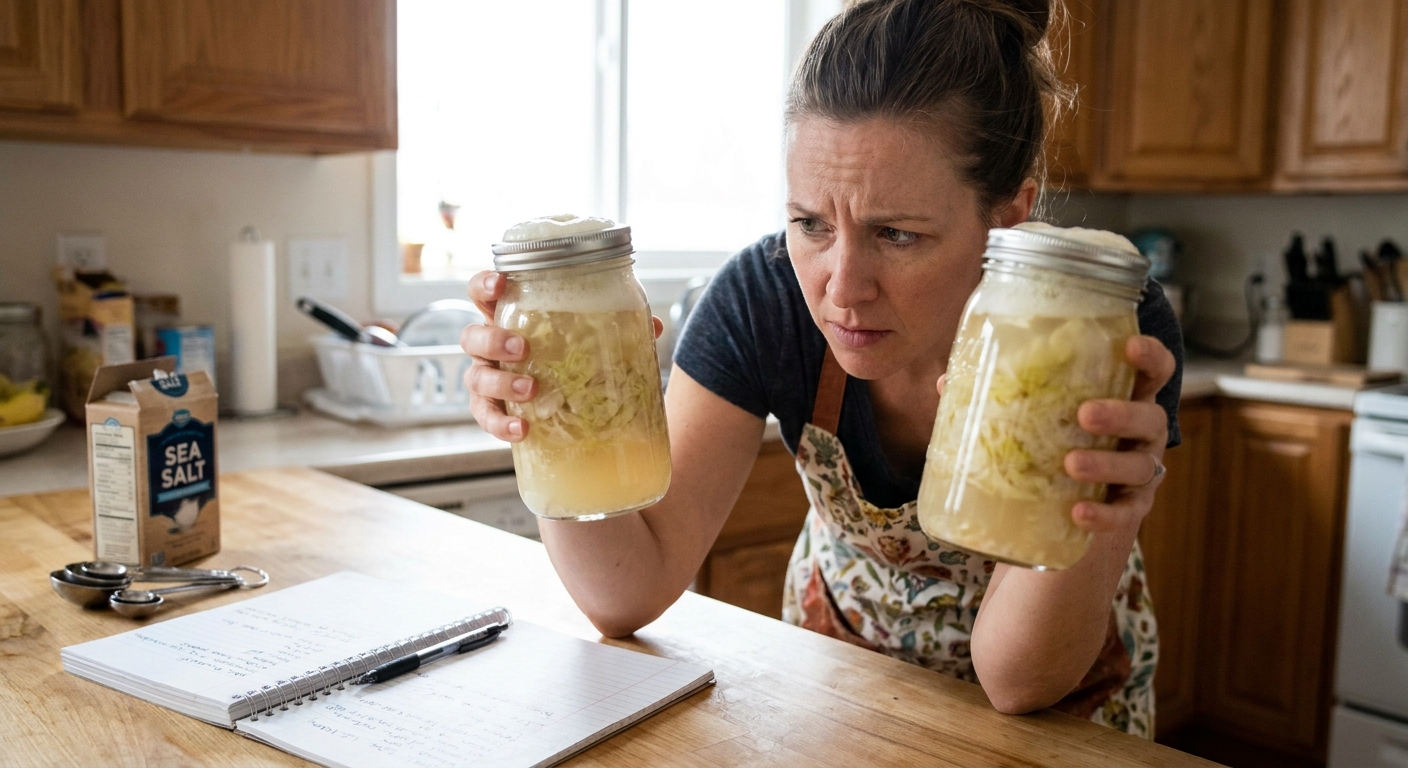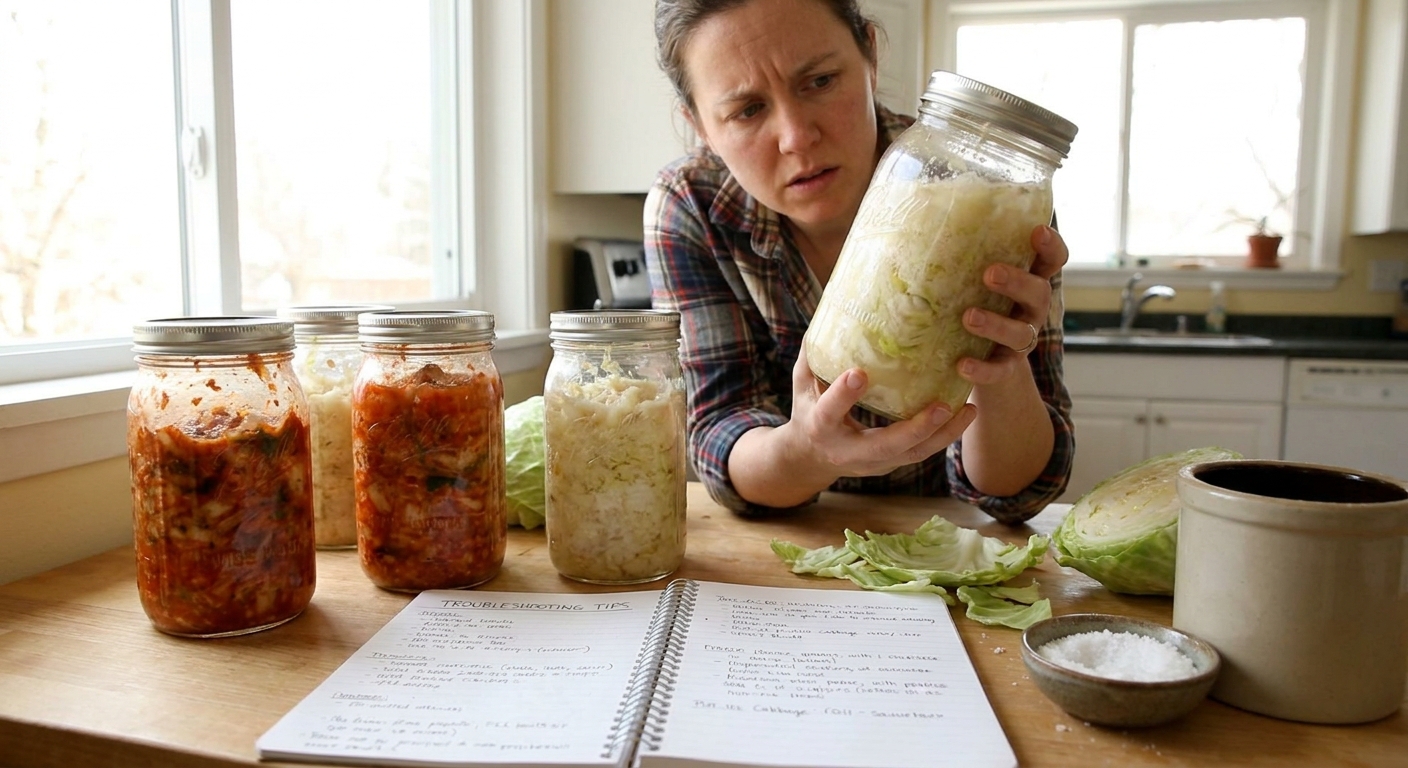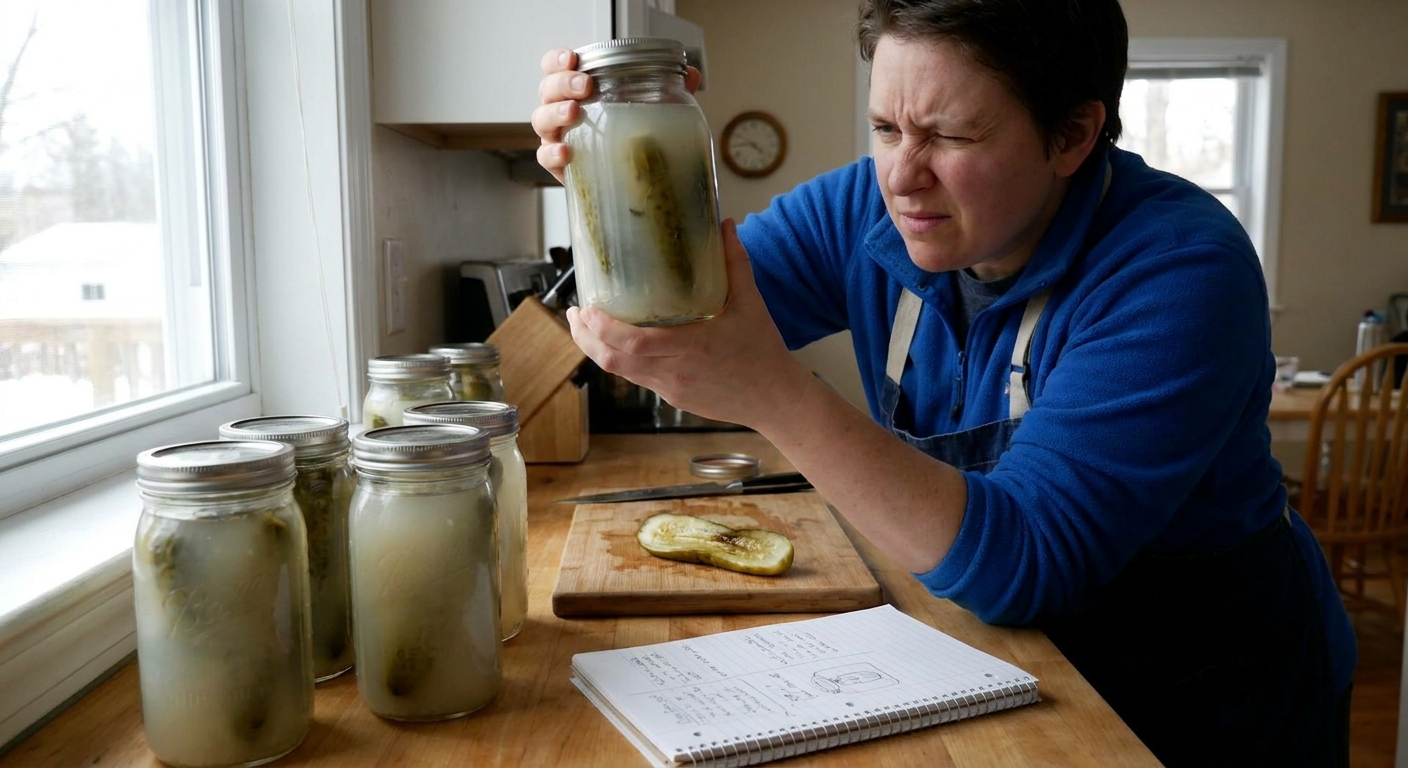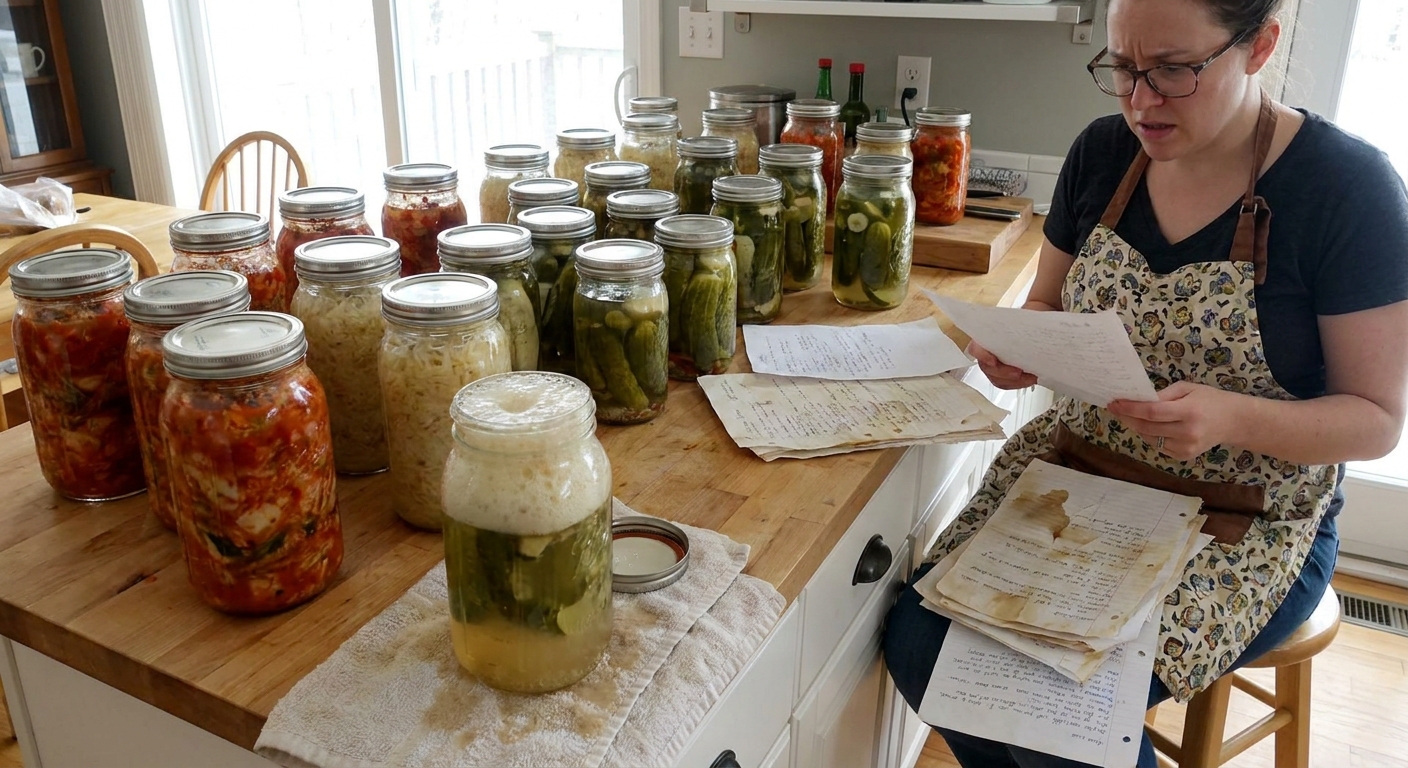
Every home fermenter needs a mental first‑aid kit—simple, reliable fixes you can reach for the moment something looks or smells wrong. This article gathers 25 practical troubleshooting moves you can use across vegetable ferments, brined pickles, kombucha, ginger bugs, and more.
Introduction
We’ll group them by problem type (texture, smell, surface growth, lack of activity, and flavor), explain the microbiology in plain language, and give timing tips so you know when you can rescue and when to start over.
Use this as a reference: skim to the section that matches what you see in your jar.
Section 1: Texture Troubles (Soft, Mushy, Slimy)
Fix 1: Lower the Temperature
Use when: Vegetables are softening faster than you expected, but still smell and taste okay.
How:
- Move jars to a cooler room, basement, or a water bath at room temp.
- Aim for 18–20°C (64–68°F) for crunch.
Why it works: Many pectin‑eating microbes (and even LAB) soften vegetables faster in warmth. Cooler temps slow all microbes and enzyme activity, preserving texture.
Fix 2: Increase Salt in Early Stages
Use when: You realize within the first 24 hours that you undersalted veggies or brine.
How:
- For dry‑salt ferments: sprinkle extra salt (0.5–1% of veg weight), massage, and repack.
- For brines: replace some liquid with a stronger brine (4–5% salt) to raise overall concentration.
Why it works: Salt selectively slows spoilage organisms more than LAB, giving beneficial bacteria time to acidify the environment.
Fix 3: Move to Fridge at the First Sign of Softness
Use when: Pickles or kraut are just slightly softer than you’d like, but still safe.
How:
- Transfer jars to the refrigerator.
- Eat within 1–3 weeks for best texture.
Why it works: Cold isn’t a reset button, but it dramatically slows both LAB and pectin‑destroying enzymes, stabilizing what you have.
Fix 4: Accept & Repurpose Over‑Soft Batches
Use when: Texture is too soft for snacking, but smell and taste are still fine.
How:
- Blend into salad dressings, sauces, dips, or soups.
- Use as a cooking acid (like using wine or vinegar) where crunch doesn’t matter.
Why it works: You still benefit from the acidity and flavors while sidestepping texture issues.
Section 2: Surface Growth (Yeast, Mold, Mystery Films)
Fix 5: Skim Kahm Yeast Daily
Use when: You see a thin, matte, white film on top of a veggie brine or fruit ferment that is not fuzzy.
How:
- Skim gently with a clean spoon.
- Repeat daily until fermentation slows.
Why it works: Kahm yeast is usually harmless but can make flavors dull. Skimming limits its influence and gives LAB the upper hand.
Fix 6: Improve Submersion
Use when: You see surface growth and floating bits.
How:
- Add a fermentation weight, small clean jar, or sanitized stone.
- Top up with 2–3% brine if needed.
Why it works: Many molds and yeasts are aerobic—they need oxygen. Keeping solids underwater reduces their access to oxygen and favors LAB.
Fix 7: Reduce Headspace in Slower Ferments
Use when: After the most active bubbling phase, you still see frequent surface growth.
How:
- Transfer ferment to a smaller jar so brine nearly fills it.
- Leave minimal headspace (but still room for slight gas).
Why it works: Less air above the ferment means fewer opportunities for airborne spores to colonize the surface.
Fix 8: Know When to Discard Moldy Batches
Use when: You see fuzzy, brightly colored (green, blue, black, pink) patches or thick mats.
How:
- For conservative home practice, discard the batch.
- Clean jars thoroughly before reuse.
Why it matters: Molds can produce mycotoxins that may diffuse beyond visible spots. In high‑salt, acidic ferments, risk is smaller but not trivial, especially for beginners.
Section 3: Smell & Off‑Odors
Fix 9: Distinguish Strong from Truly Bad
Use when: You’re unsure whether a smell is normal.
How:
- Normal strong smells: sulfur (cabbage), garlic, onion, vinegary tang.
- Concerning: rotten meat, sewage, vomit, harsh chemical notes.
- Strong but clean? Monitor and continue.
- Truly rotten? Discard.
Action:
Why it works: LAB, yeasts, and acetic acid bacteria produce distinctive tangy and sometimes funky but non‑putrid compounds. Putrid notes suggest protein‑degrading spoilage bacteria.
Fix 10: Improve Cleanliness for Future Batches
Use when: You’ve had more than one foul‑smelling failure.
How:
- Wash hands, jars, and tools thoroughly.
- Avoid using cloths/scrubbers that also touch raw meat.
- Rinse soap completely.
Why it works: Fermentation does not require sterility, but basic sanitation reduces pathogen and spoilage loads so LAB can dominate more easily.
Fix 11: Shorten Room‑Temperature Time
Use when: Ferments smell fine but get too intense or slightly unpleasant if left long at room temp.
How:
- Move jars to the fridge earlier, especially in hot seasons.
- Treat room‑temp time as a “kickstart,” not the whole process.
Why it works: Microbial activity and flavor compound production are temperature‑dependent; cooler storage preserves a favorable balance once you’ve reached a good point.
Section 4: Lack of Activity (No Bubbles, No Sourness)
Fix 12: Confirm You’re Not Expecting Too Much, Too Soon
Use when: It’s day 1–2 and you see no obvious changes.
How:
- Wait until day 3–4 before worrying for most veggie ferments.
- For kombucha, wait 5–7 days for tang.
Why it works: Microbes need time to wake up, multiply, and acidify their environment. The earliest phase can be visually subtle.
Fix 13: Check and Adjust Temperature
Use when: Nothing happens after several days.
How:
- Use a thermometer near the jars.
- For veggies: aim for 18–22°C (64–72°F).
- For kombucha and wild sodas: 22–27°C (72–80°F).
Why it works: Enzymes and cell division rates depend strongly on temperature; too low and everything crawls.
Fix 14: Verify Salt and Water Quality
Use when: Fermentation is inexplicably slow.
How:
- Taste brine: if incredibly salty, dilute slightly.
- Switch to filtered or dechlorinated water in your next batch.
Why it works: Too much salt or chlorine suppresses LAB significantly, delaying or stopping fermentation.
Fix 15: Seed with Active Starter (When Appropriate)
Use when: Multiple batches are sluggish or fail to start, especially wild soda, kombucha, or brined veg.
How:
- Add a bit of successful ferment brine to new jars (1–4 tbsp per quart for veggies).
- For kombucha: use 10–20% strong, previous batch kombucha.
Why it works: Seeding with a thriving LAB and yeast community jumps over the slow “who will win?” phase and biases in favor of known, desirable microbes.
Section 5: Overactivity (Overflow, Explosions, Over‑Sour)
Fix 16: Burp Sealed Jars During Peak Activity
Use when: Lids bulge or jars leak brine.
How:
- During days 2–5, open lids once or twice daily to release gas.
- Retighten afterward.
Why it works: LAB and yeasts produce CO₂. Without venting, pressure can crack glass or spray brine when opened.
Fix 17: Use a Catch Tray or Bowl
Use when: You know a ferment is especially active (kimchi, fruit‑heavy ferments).
How:
- Place jars on a rimmed tray or in a shallow bowl.
Why it works: Prevents brine spills from turning your shelf into a sticky science experiment.
Fix 18: Shorten Room‑Temp Second Fermentation for Bottled Drinks
Use when: Bottled kombucha or soda overcarbonates or gushes.
How:
- Reduce warm bottle time from, say, 4 days to 2 days.
- Refrigerate earlier.
Why it works: Carbonation is a function of sugar amount, yeast activity, and time. Reducing any of these lowers pressure.
Fix 19: Blend Over‑Sour Batches into Recipes
Use when: Ferment is safe but too sharp for direct eating.
How:
- Use kraut/kimchi brines as vinegar in salad dressing.
- Add strongly sour veggies to stews, braises, and beans for depth.
Why it works: Acidity is a great flavor tool in cooking, even if the texture or standalone flavor isn’t ideal.
Section 6: Flavor Imbalances
Fix 20: Balance Saltiness at Serving Time
Use when: Finished ferments are a bit too salty.
How:
- Rinse lightly just before eating.
- Pair with unsalted grains, potatoes, or fresh veggies.
Why it works: You can’t remove salt from the jar, but you can dilute it in the dish.
Fix 21: Add Aromatics Post‑Fermentation
Use when: Ferments taste flat but are otherwise fine.
How:
- Stir in fresh herbs, garlic, citrus zest, or spices when serving.
Why it works: Some volatile aromatics fade during long ferments. Adding them fresh restores complexity without risking the ferment itself.
Fix 22: Understand and Use Fermentation Windows
Use when: You’re repeatedly overshooting your preferred sourness.
How:
- Taste daily around your expected “done” window.
- For quick ferments: days 3–7.
- For kraut/kimchi: days 7–21.
Why it works: There’s no single “correct” endpoint; learning your own preference window prevents flavor disappointment.
Section 7: Planning & Note‑Taking Fixes
Fix 23: Keep a Simple Ferment Log
Use when: You want to systematically improve and troubleshoot.
How:
- Note for each batch:
- Date and recipe.
- Salt % and type.
- Room temperature.
- Day‑by‑day notes on smell, bubbles, surface changes.
Why it works: Patterns emerge: maybe summer batches soften faster, or a certain cupboard runs colder. You can then adjust proactively.
Fix 24: Adjust for Season
Use when: Ferments change dramatically between winter and summer.
How:
- In summer: use slightly more salt or shorten room‑temp time.
- In winter: ferment a bit warmer or give more time.
Why it works: Ambient temperature shifts microbe speed and therefore texture and flavor timelines.
Fix 25: Standardize One “Reference” Recipe
Use when: You’re still learning what “normal” looks like.
How:
- Make the same basic sauerkraut or pickle recipe several times with careful measurements.
- Don’t change too many variables at once.
Why it works: With a well‑understood baseline, deviations in other experiments are easier to interpret and troubleshoot.
Microbiology Thread: Why These Fixes Work
Across all these first‑aid moves, you’re manipulating just a few levers:
- Salt (osmotic pressure) – influences which microbes can handle the stress.
- Temperature – speeds or slows metabolism and enzyme activity.
- Oxygen – controls surface vs. submerged ecosystems.
- Time – lets desired microbes establish or, if overextended, shift the balance.
Lactic acid bacteria, acetic acid bacteria, and wild yeasts each have preferred ranges for these levers. Troubleshooting is essentially about re‑tuning the environment so that your allies win the microscopic competition.
Closing: Build Your Own First‑Aid Instincts
When a jar looks or smells wrong, don’t jump straight to despair or blind faith. Pause, observe, and ask:
- What lever—salt, temp, oxygen, time—might be off here?
- Is this a rescue situation (soft but okay, mild yeast film) or a discard situation (mold, putrid smell)?
Over time, these 25 fixes will become intuitive. You’ll know when to skim and wait, when to chill and eat, and when to thank the microbes for the lesson and start fresh.
That’s the heart of fermentation troubleshooting: a calm conversation with your jars, guided by science and practice, one bubble at a time.