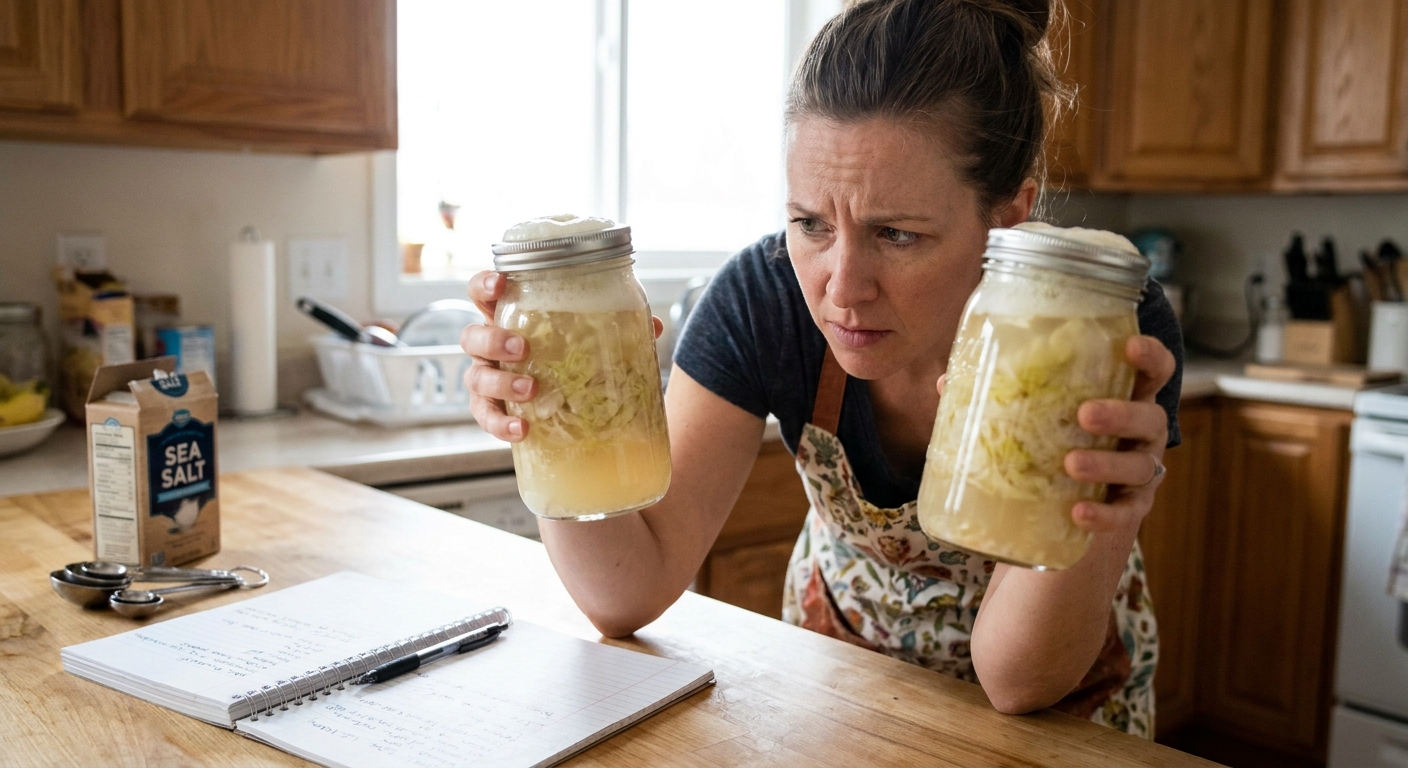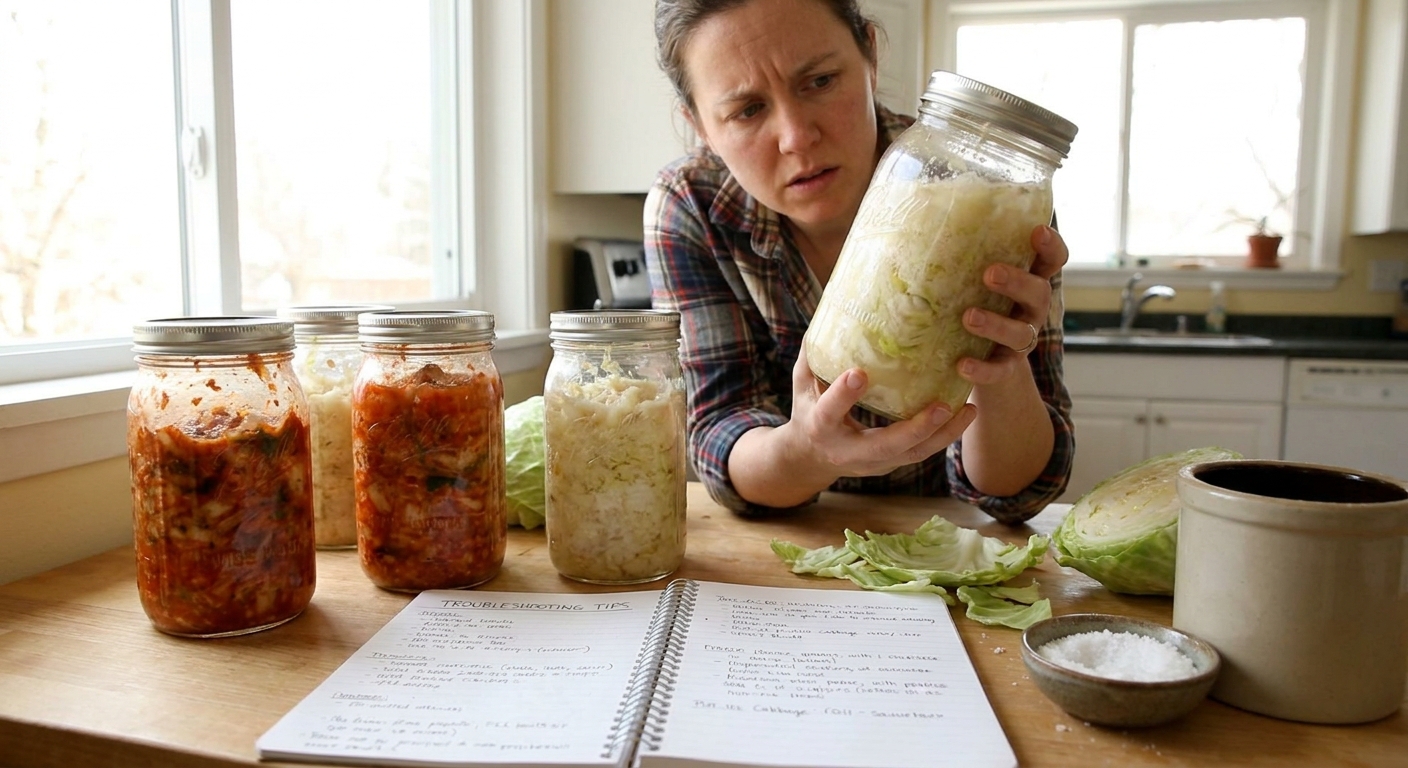
Sauerkraut and kimchi are forgiving, but when they go wrong, they can go very wrong—sulfur bombs, mushy cabbage, pink streaks, or no fermentation at all. This guide walks you through a hands‑on, stepwise troubleshooting process tailored specifically to cabbage ferments.
Introduction
We’ll cover prep, salting, packing, fermentation stages, and what to do when your cabbage misbehaves. Along the way, we’ll peek under the lid at the microbes shaping each stage.
Step 1: Start with the Cabbage Check
Before you blame the microbes, check your produce.
What You Want
- Firm, heavy heads of cabbage.
- Crisp leaves, not rubbery or slimy.
- No black rot or deep insect damage.
- Old, limp cabbage → struggles to release enough juice.
- Pre‑shredded bagged mixes → often too dry or chlorinated.
What Can Cause Trouble
Fix: If cabbage is limp but not spoiled, soak wedges in cold water for 20–30 minutes, then pat dry before shredding. Hydrated cabbage releases brine more easily.
Step 2: Confirm Salt Percentage by Weight
Sauerkraut and kimchi work best at 2–2.5% salt by weight of vegetables.
Simple Weighing Method
- Place your mixing bowl on a scale and tare to zero.
- Add shredded cabbage and other veggies.
- Note the total weight in grams (for example, 1500 g).
- Multiply by 0.02 for 2% salt (1500 × 0.02 = 30 g).
- Weigh out 30–37 g salt for 2–2.5%.
If You Didn’t Weigh and Things Look Off
- Too salty (brine burns your tongue): dilute. Massage in a bit of unsalted cabbage or add a splash of dechlorinated water and redistribute.
- Not salty enough (barely salty water): sprinkle a bit more salt and remix thoroughly in the first 12–24 hours.
Microbiology Note
At 2–2.5% salt, Leuconostoc species are slowed just enough to prevent rot but still active. They produce aromatic compounds and lactic acid that pave the way for more robust Lactobacillus species later.
Step 3: Assess Brine Levels & Packing
Symptom: Dry, Exposed Cabbage on Top
Likely Causes
- Not enough massaging/pressing.
- Cabbage was very dry.
- Container too large, so cabbage isn’t tightly packed.
Hands‑On Fix
- With clean hands, press the cabbage down firmly.
If you still lack brine after 10–15 minutes of renewed massaging:
- Make a 2% salt brine (20 g salt per 1 L water) and add just enough to submerge cabbage. 3. Add a weight (small jar, fermentation weight, or clean stone) to keep cabbage below brine.
Target: Submersion
- The rule is simple: vegetables below, brine above.
- Any leaf exposed to air is at higher risk of mold or yeast.
Microbiology Note
LAB are facultative anaerobes—they don’t need oxygen to thrive and often prefer less of it. Many spoilage organisms (molds especially) require oxygen. Brine acts like a selective shield.
Step 4: Temperature & Timing for Cabbage Ferments
Ideal Range
- 18–22°C (64–72°F) for balanced flavor and texture.
What to Expect Over Time
Days 0–1
- Just salted, packed, and weighted.
- Smell: mostly cabbagey and salty.
- Little to no bubbling.
- Active bubbling, cloudy brine.
- Mildly tangy aroma.
- For kimchi: spicy, garlicky notes bloom.
- Sourness grows.
- Texture still crisp if kept cool.
- Deeper acidity and complex flavors.
- Stronger aroma, softer texture.
- Below 16°C (60°F), fermentation slows a lot.
- Move jars to a warmer room, on top of the fridge, or in an insulated box away from cold drafts.
- Above 24°C (75°F), ferments may soften too fast and become sharply sour.
- Move to a cooler spot; you can place jars in a water bath at room temperature to buffer heat swings.
Days 2–4
Days 5–7
Days 10–21
If It’s Too Cold
If It’s Too Warm
Symptom‑Based Troubleshooting for Sauerkraut & Kimchi
1. "My Kraut/Kimchi Smells Horrible, Not Just Sour"
Healthy smells: sour, garlicky, oniony, cabbagey, even mildly sulfurous.
Bad signs: rotten meat, vomit, fecal, or harsh chemical odors.
Likely Problems
- Cabbage not submerged.
- Very low salt.
- High temperatures and long time at room temperature.
- If odor is strongly putrid, discard; don’t try to rescue.
- Review: salt, submersion, and temperature for your next batch.
Action
2. "There’s White Stuff on Top"
Flat White Film → Often Kahm Yeast
- Not fuzzy, spreads as a thin layer.
- Smells yeasty or like flat beer.
- Skim off daily.
- Ensure everything is submerged; remove any floating leaves.
- If the ferment smells and tastes fine, it’s usually okay.
- Raised, fuzzy patches; may be green, blue, black, or pink.
- If mold is limited to a small, clearly surface area and the rest smells good, some experienced fermenters choose to remove it deeply. For conservative home practice, especially for beginners, the safest approach is to discard and restart.
Fix:
Fuzzy Spots → Mold
Action:
3. "My Cabbage is Mushy"
Causes
- High fermentation temperature.
- Very long fermentation time at room temp.
- Too little salt.
- If slightly soft but still pleasant: move to fridge immediately; eat sooner rather than later.
- If mushy, slimy, or stringy: discard.
- Stay close to 2–2.5% salt.
- Use fresh, firm cabbage.
- Aim for a cooler spot in the house.
Fixes
Prevention for Next Time:
4. "It’s Not Sour Enough"
Checkpoints
- Has it been at least 5–7 days at the proper temperature?
- Was salt at or below 2.5%?
- Give it more time at room temperature: often another 3–7 days.
- Ensure brine still covers cabbage; add a bit of 2% brine if levels dropped.
Fixes
5. "It’s Way Too Sour"
Fixes
- Move jars to the fridge to halt further souring.
- When serving, mix kraut or kimchi with:
- Fresh, unsalted cabbage in slaws.
- Neutral grains (rice, barley) or beans.
- Creamy elements (yogurt, mayo, tahini) to balance acidity.
6. "My Kimchi is Gassy or Foamy"
Some kimchi recipes ferment vigorously due to added rice flour pastes, fruits, or sugar.
Fixes
- Loosen lids daily during the first 3–4 days to release pressure.
- Once it smells pleasantly sour and complex, move to the fridge.
Note: A little foam early on can be normal; persistent thick foam plus off‑odors is a warning sign.
Understanding the Microbial Succession in Cabbage Ferments
Sauerkraut and kimchi follow a predictable microbial timeline:
Day 0–2: Early Colonizers
- Weakly salt‑tolerant bacteria and some wild yeasts are still around. - Quickly, Leuconostoc species begin to dominate.
Day 3–7: Leuconostoc Phase
- Heterofermentative LAB produce lactic acid, CO₂ (bubbles), and flavor compounds. - pH drops; brine turns cloudy.
Day 7–21: Lactobacillus Phase
- More acid‑tolerant Lactobacillus plantarum and friends take over. - Sourness deepens, texture softens gradually.
Your job as a fermenter is to set the stage (salt, temperature, oxygen levels) so that beneficial LAB win this succession race.
Quick Rescue Decisions Checklist
When you open a questionable jar, walk through this list:
Visual
- Fuzzy colored growth? → likely discard. - Thin white film only? → probably kahm yeast; skim.
Smell
- Clean sour, cabbage, garlic, spice? → usually okay. - Rotten, fecal, or chemical? → discard.
Texture
- Crunchy to slightly soft? → good. - Mushy, slimy, stringy? → discard.
Brine Level
- Cabbage fully submerged? → safer. - Exposed knots of cabbage? → higher risk.
If you’re unsure and new to fermentation, lean on the side of caution. Confidence grows with experience and many jars observed.
Final Thoughts: Let the Jar Teach You
Every batch of sauerkraut or kimchi is a small microbial ecosystem. When something goes wrong, it’s not a failure—it’s data.
Ask yourself:
- Were salt, temperature, and submersion within target ranges?
- At what day did things start to look or smell off?
- What changed compared to successful batches (different room, season, cabbage, salt)?
Note these details in a fermentation notebook. Over time, troubleshooting transforms from a panic response into a calm, almost scientific curiosity. You’ll come to recognize the smells of early success, the look of harmless surface yeasts, and the exact moment your cabbage becomes perfect for your taste.
Trust your senses, respect your microbes, and let each jar—good or bad—make you a better fermenter.