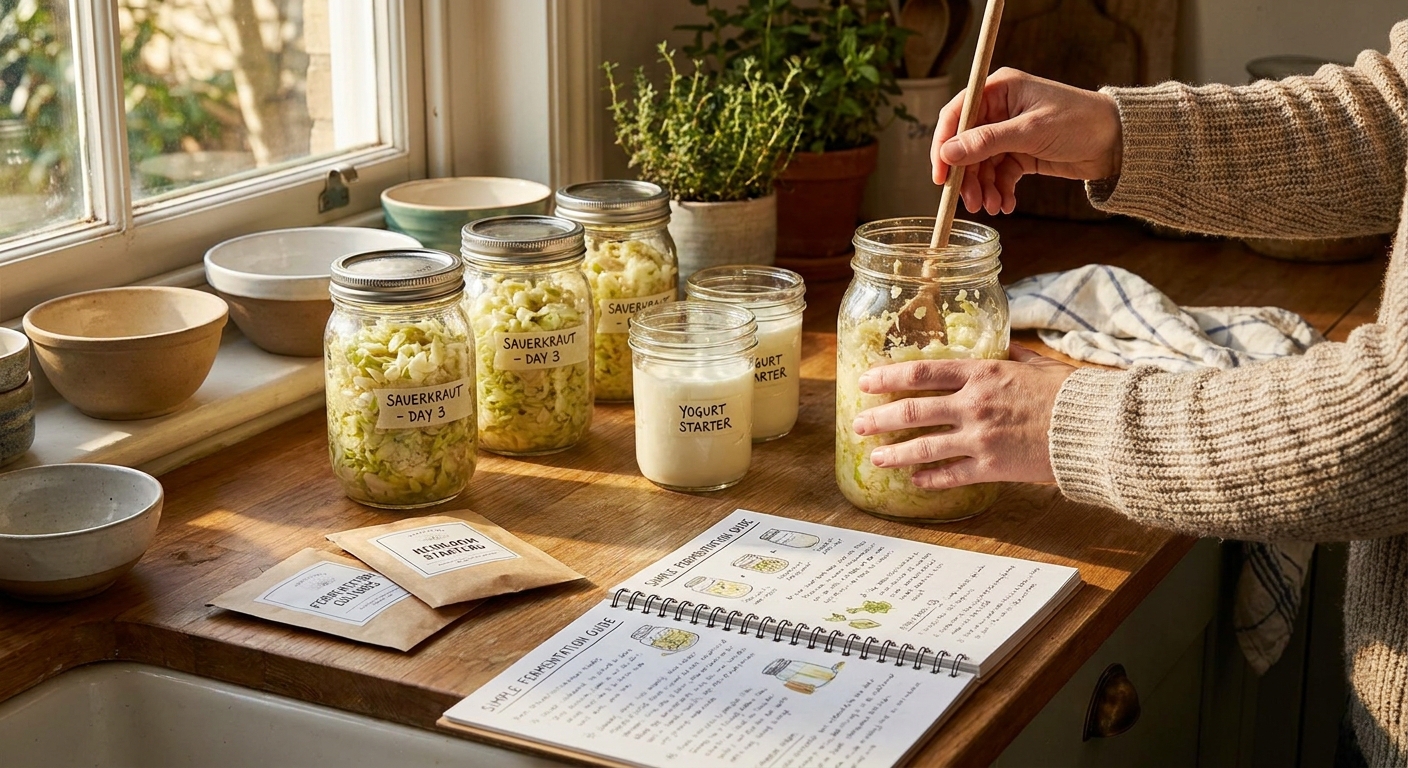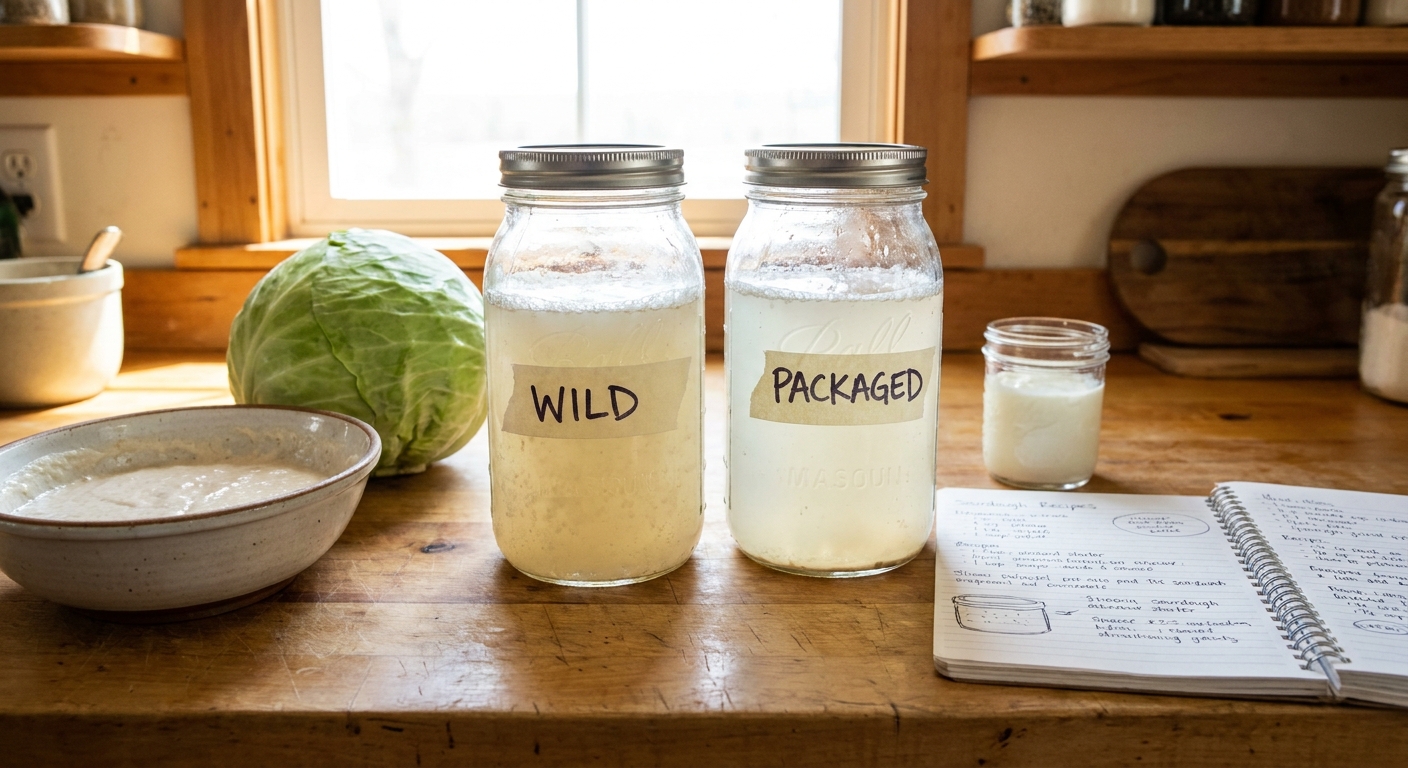
Every fermenter, no matter how careful, eventually faces a jar that smells wrong, looks strange, or simply refuses to bubble. The good news: most problems have clear causes and workable fixes.
When Your Ferments Misbehave: Don’t Panic, Diagnose
This guide focuses on starter cultures—what happens when they don’t perform, how to gently bring them back, and when to say goodbye and start over.
We’ll move through common ferments one by one, like a calm kitchen mentor helping you troubleshoot.
Ground Rules for Safe Troubleshooting
Before reviving any starter or batch, run through this safety checklist:
- Color: Fuzzy green, blue, black, or pink mold? Discard the batch.
- Smell: Rotten, putrid, harsh chemical, or strongly fecal smells? Discard.
- Texture: Slimy meat or dairy? Discard.
For vegetable brines, slight cloudiness and sediment are normal. For sourdough and dairy, mild alcohol or tang is fine. Trust your nose and eyes.
When in doubt—especially with dairy or meat—it’s safer to compost the experiment and rescue only the lesson.
Yogurt Starter Troubleshooting
Scenario 1: Milk Didn’t Thicken
Symptoms: After 8–12 hours at warm temperature, your yogurt is still liquid.
Likely Causes:
- Starter culture was dead or too weak.
- Incubation temperature was too low.
- Incubation time was too short.
Step‑By‑Step Rescue:
Temperature Check:
- Confirm your incubator or method keeps milk at 40–45°C (104–113°F). - If not, adjust for the next batch.
Extend Time (If Smell Is Okay):
- If the milk smells clean and only slightly tangy, keep incubating for another 4–6 hours. - If no change after that, discard.
New Starter:
- Use a fresh, live yogurt or new packet of culture, not the failed batch, to inoculate the next one.
Scenario 2: Yogurt is Grainy or Separated
Symptoms: Lumpy curds floating in whey; texture not smooth.
Likely Causes:
- Over‑fermentation (too long).
- Incubation temperature too high.
Rescue & Prevention:
Strain:
- Line a strainer with cloth and drain yogurt for 1–2 hours. You’ll get a thicker, smoother product (like Greek yogurt).
Next Time:
- Lower incubation temp slightly (aim for 42°C / 108°F). - Start taste‑checking at 6 hours to find your ideal endpoint.
Kefir Grain Troubleshooting
Scenario 1: Kefir Too Sour or Separating Quickly
Symptoms: Very sour taste, clear separation into curds and whey within 24 hours.
Likely Causes:
- Too long at room temp.
- Warm environment speeding fermentation.
Step‑By‑Step Rescue:
Shorten Fermentation:
- Stop the next batch at 12–18 hours.
Cooler Spot:
- Move jar to a cooler room if possible.
Refresh Grains:
- Give grains a few cycles of fresh milk with shorter ferments to rebalance.
Scenario 2: Kefir Grains Slowing Down or Shrinking
Symptoms: Less activity, fewer bubbles, thinner kefir, grains smaller or fewer.
Likely Causes:
- Infrequent feeding.
- Long time in the fridge.
- Exposure to very hot temperatures.
Rescue Steps:
Room‑Temp Rehab (3–7 Days):
- Keep grains at room temp in fresh milk, changing milk every 24 hours.
Avoid Heat Shock:
- Don’t pour hot milk over grains; always use room‑temp or cool milk.
If No Improvement:
- After a week of rehab, if there’s still no activity or off smells develop, replace grains.
Sourdough Starter Troubleshooting
Scenario 1: Starter Not Rising
Symptoms: Minimal or no rise after feeding; few bubbles; heavy texture.
Likely Causes:
- Too cold (below ~20°C / 68°F).
- Not feeding often enough.
- Young starter still developing.
Step‑By‑Step Rescue:
Warmth:
- Move to a warmer spot (22–26°C / 72–78°F). On top of the fridge or near a warm appliance often works.
Feeding Schedule:
- Feed twice daily (every ~12 hours) with equal weights flour and water. - Use at least part whole grain flour to boost microbial diversity.
Watch for Change:
- You should see better rise within 3–5 days. If the smell improves and bubbles increase, keep going.
Scenario 2: Starter Smells Harsh, Like Nail Polish
Symptoms: Strong solvent or alcohol smell; may have a layer of grayish liquid (hooch) on top.
Likely Causes:
- Starter is hungry and producing more acetic acid and ethanol.
Rescue Steps:
Stir In or Pour Off Hooch:
- You can stir it back in for extra sourness or pour it off for milder flavor.
Increase Feed Ratio:
- Keep a small amount of starter and feed with more fresh flour and water (e.g., 1 part starter : 4 parts flour : 4 parts water by weight).
Feed More Often:
- Daily (fridge) or twice daily (room temp) until smell is pleasantly tangy.
Scenario 3: Mold or Strange Colors
Symptoms: Pink, orange, green, blue, or black spots; fuzzy growth.
Likely Causes:
- Contamination from environment or utensils.
Action:
- Do not attempt rescue. Discard the starter, clean the jar thoroughly, and start again.
Vegetable Ferment Troubleshooting (Using Starters or Saved Brine)
Scenario 1: No Sourness After Several Days
Symptoms: Veggies stay mostly salty and raw‑tasting after 4–5 days.
Likely Causes:
- Temperature too low.
- Inactive starter brine or whey.
- Too much salt.
Rescue Steps:
Check Temperature:
- Aim for 18–22°C (64–72°F). Warmer helps, but too warm can soften veggies.
Add Fresh Starter:
- Add 2–4 tablespoons of active brine from a vigorous ferment, or a spoonful of live whey.
Wait Another 2–3 Days:
- Taste daily. If still flat after that, something is off—consider scrapping and starting fresh.
Scenario 2: Mushy or Slimy Veggies
Symptoms: Texture soft, limp, or slightly slimy.
Likely Causes:
- High temperature.
- Too little salt.
- Veggies not submerged, inviting unwanted microbes.
Rescue (Limited):
Assess Safety:
- If smell is unpleasant or appearance shows mold, discard.
If Smell is Okay but Texture is Off:
- You can refrigerate and use quickly in cooked dishes (like soups or braises) where texture matters less.
Prevention Next Time:
- Use 2–2.5% salt by weight.
- Make sure all veggies stay submerged.
- In hot weather, consider a cooler or basement location and/or add a spoon of active starter brine.
Scenario 3: White Film on Top (Kahm Yeast)
Symptoms: Thin, white/cream film; not fuzzy; sometimes wrinkly.
Likely Causes:
- Wild yeasts thriving on oxygen at the surface.
Rescue Steps:
- Skim Off Gently.
Adjust:
- Push veggies below brine and top up if needed. - Add a fermentation weight or an airlock lid.
Taste:
- If flavor is acceptable and smell is normal, continue fermenting or move to the fridge.
Saved Brine and Back‑Slopping Problems
Using brine or whey from a previous batch to start a new one is powerful—but you can accidentally transfer issues.
Scenario: Each New Batch Tastes Slightly Worse
Symptoms: Off‑flavors slowly build over generations of back‑slopping.
Likely Causes:
- Unwanted microbes creeping into your culture over time.
Rescue Plan:
Reset Occasionally:
- Every few batches, start a ferment without using old brine, or use a fresh commercial starter.
Tighten Hygiene:
- Use clean utensils and jars. - Avoid dipping fingers directly into starter brine.
Knowing When to Let Go of a Starter
Sometimes the bravest thing you can do in fermentation is start over.
General signs a starter culture has reached the end of its useful life:
- Off‑smells persist despite several refresh cycles.
- Visible mold or unusual colors appear.
- Performance declines dramatically (e.g., yogurt never thickens; sourdough never rises).
When that happens:
- Compost the Old Culture.
- Wash All Equipment Thoroughly.
- Begin Again with Fresh Ingredients and, if needed, a Fresh Commercial Starter.
Think of it as clearing the stage so a new, healthy microbial cast can move in.
A Calm, Systematic Way to Troubleshoot Any Ferment
When you run into trouble with a starter or batch, move through these questions:
Is it likely safe?
- Check color, smell, and texture. When in doubt, discard.
What’s the temperature?
- Too cold = slow or stalled. Too hot = off‑flavors, texture problems.
Did I feed or inoculate enough?
- Weak or tiny inoculation = slow ferment.
Is there enough protection?
- For veggies: salt and submersion. For dairy: quick acidification. For sourdough: regular feeds.
Can I refresh the culture?
- Increase fresh food (milk, flour, brine) and frequency of attention for a few days.
Fermentation is a partnership with living microbes. Sometimes they’re late to the party, sometimes they’re overeager, and occasionally they invite the wrong friends. With patience, observation, and a willingness to start over when safety is uncertain, you’ll gain calm confidence—even when a jar goes sideways.