You don’t need a degree to make kombucha—but knowing what’s living in your jar makes you calmer, more precise, and more creative. Once you understand who is in your SCOBY and what each microbe prefers, small tweaks in sugar, tea, and temperature suddenly make sense.
Why Understanding the Microbiology Makes You a Better Brewer
Let’s lift the lid (gently) and look at what’s going on in there.
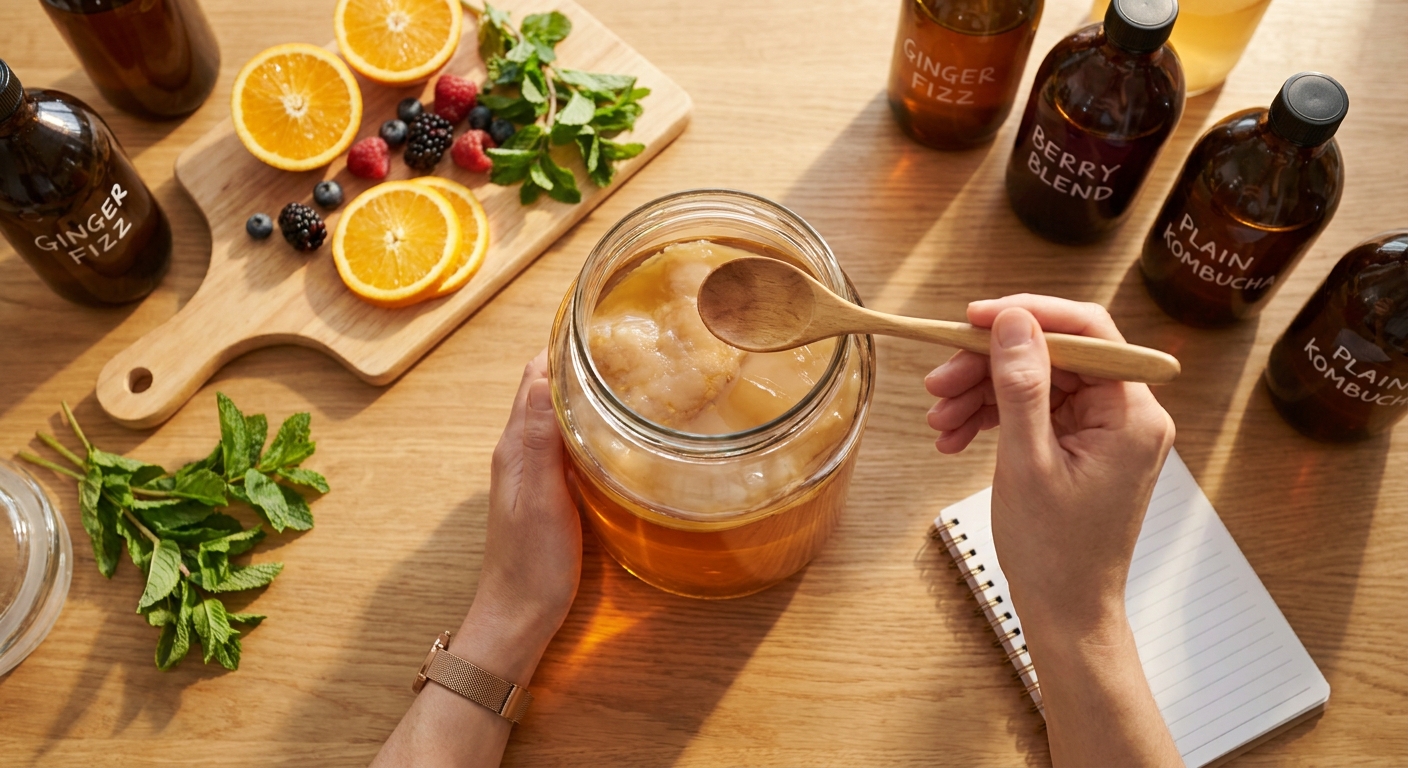
Meet the SCOBY: Living Cellulose Hotel
The SCOBY—the rubbery disk you see on top—is mostly cellulose, a tough carbohydrate made by acetic acid bacteria. Think of it as:
- A raft that floats on the surface
- A shield, limiting oxygen and contamination
- A condo complex for bacteria and yeast to live in
Below the surface, in the liquid, is where the densest population of microbes actually hangs out.
Main Microbial Players
Every SCOBY is slightly different, but most kombucha cultures include:
- Yeasts (e.g., Saccharomyces, Zygosaccharomyces, Brettanomyces):
- Eat sugar
- Produce ethanol (alcohol) and CO₂
- Acetic Acid Bacteria (e.g., Acetobacter, Gluconacetobacter, Komagataeibacter):
- Eat ethanol
- Produce acetic acid (vinegar), gluconic acid, and cellulose
- Lactic Acid Bacteria (in some cultures):
- Produce lactic acid, contributing softer tartness
These microbes don’t work alone—they form a symbiotic ecosystem, each feeding on the byproducts of the others.
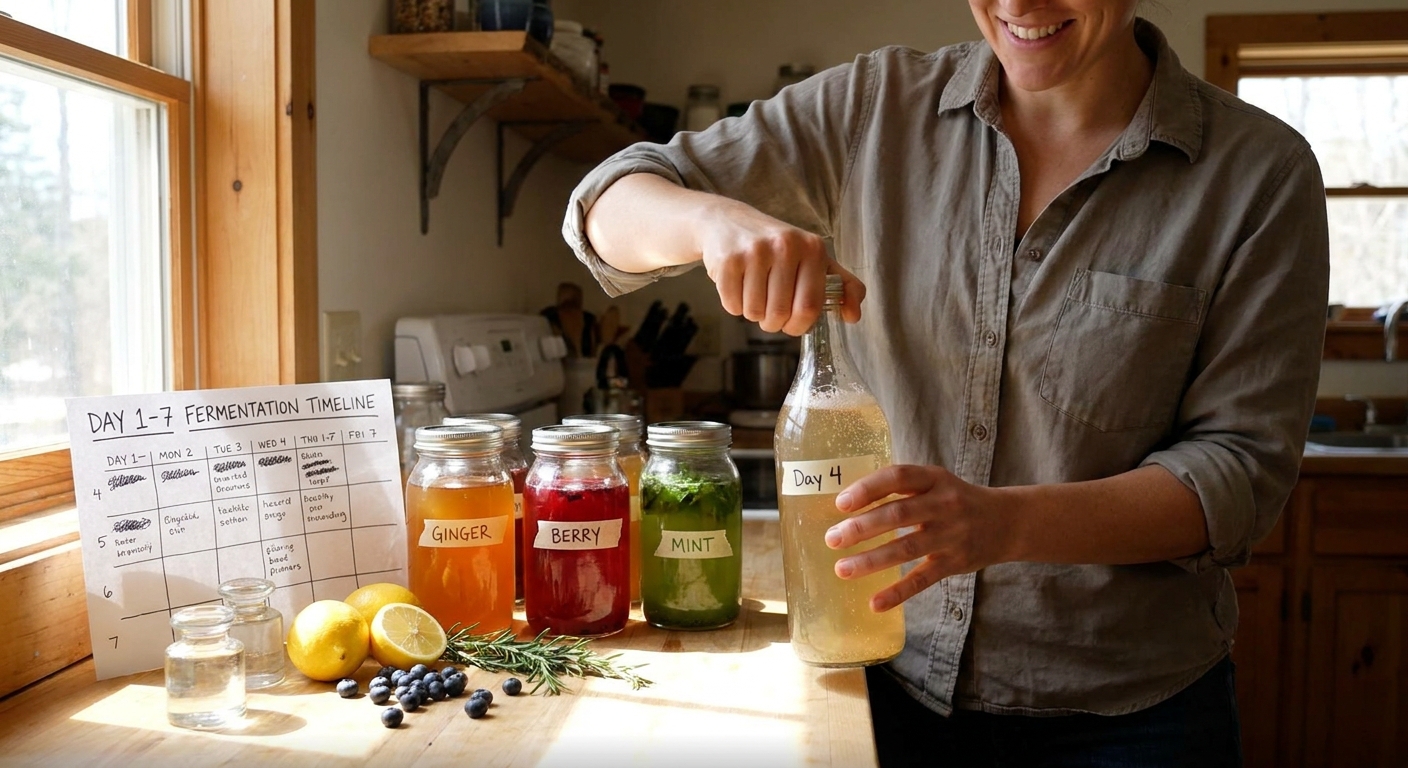
The Fermentation Timeline: What Happens Day by Day
We’ll assume a typical room temperature of ~23°C / 73°F.
Days 0–1: Sweet Tea with Microbial Seeds
You start with:
- Sugary tea (sucrose)
- Starter tea (already acidic)
- SCOBY (a dense microbial mat)
- Yeasts wake up and begin splitting sucrose into glucose and fructose.
- Bacteria remain relatively quiet while pH is still high (less acidic).
- Not much. Maybe a few bubbles around the edge.
Key events:
What you see:
Days 2–4: Yeast Party
Metabolism in action:
- Yeasts ferment glucose/fructose → ethanol + CO₂.
- Tiny pockets of gas may get trapped under the forming surface layer.
- pH begins to drop as acids slowly appear.
- Taste: still sweet, faint tang.
pH and taste:
Days 4–7: Bacterial Takeover Begins
Acetic acid bacteria ramp up:
- They consume the ethanol made by yeast.
- They produce acetic acid (vinegar-like) and gluconic acid.
- They spin cellulose into a thicker, opaque SCOBY on the surface.
- Noticeably tangy now.
- Sweetness fading daily.
Taste:
Days 7–14: Acid Balancing Act
Now you have:
- Less sugar
- Some remaining ethanol
- A growing mix of organic acids (acetic, gluconic, etc.)
- Decide when the balance tastes right for you.
- Earlier: sweeter, milder acidity.
- Later: sharper, more vinegar-like.
Your job as brewer:
How Ingredients Shape the Microbiome
1. Sugar: Fuel, Not Flavor
Your microbes don’t care about your diet goals—they need calories. White cane sugar (sucrose) is the easiest fuel.
- More sugar:
- Longer lasting fermentation
- Potential for more alcohol initially, then more acid later
- Less sugar:
- Yeast may underperform
- Weak carbonation and thin flavor
Honey, coconut sugar, or alternatives?
These bring in extra minerals and sometimes antimicrobial compounds. Some SCOBYs handle this fine; others get stressed or shift their microbiome balance.
Practical tip: Master white sugar first. Then gradually experiment, watching how your ferment responds.
2. Tea: Nutrient Broth
Tea provides:
- Nitrogen and amino acids (microbe nutrients)
- Tannins and polyphenols (flavor and structure)
- Strong tannins, robust flavor
- Very SCOBY-friendly
- Lighter flavor, softer tannins
- Often a bit more delicate, floral
- Often lack key nutrients for microbes
- Some herbs are antimicrobial (e.g., mint, sage) and can slow or disrupt fermentation
Black tea:
Green tea:
Herbal tisanes:
Best practice: Use at least 50–75% real Camellia sinensis tea (black/green/oolong). Add small amounts of herbals if desired.
How Temperature Steers Your Microbial Crew
Temperature changes which microbes dominate and how fast they work.
- Cool (18–20°C / 64–68°F):
- Yeasts sluggish, bacteria slow
- Long fermentation, subtle acidity
- More risk of mold due to slow pH drop
- Moderate (21–24°C / 70–75°F):
- Balanced yeast/bacteria activity
- Predictable timing (7–12 days)
- Warm (25–28°C / 77–82°F):
- Fast fermentation
- Sharper acetic acid, more vinegar potential
- Yeasts can overshoot, leading to solventy notes if extreme
Hands-on tip: If your kombucha keeps turning to vinegar too fast, your bacteria are winning the race. Cool the room slightly or shorten your ferment window.
The Second Ferment: Bottle Microbiome Dynamics
When you bottle kombucha with some residual sugar and/or fruit:
- Yeasts consume fresh sugars in a sealed space.
- CO₂ can’t escape, so it dissolves into the liquid → carbonation.
- Bacteria are less active (less oxygen), but still present.
New SCOBYs in bottles:
The thin, jelly disk that forms at the top of a bottle is just microbes building a tiny cellulose raft where oxygen sneaks in at the surface.
Practical takeaway: Sediment and baby SCOBYs in bottles are a sign of life, not contamination.
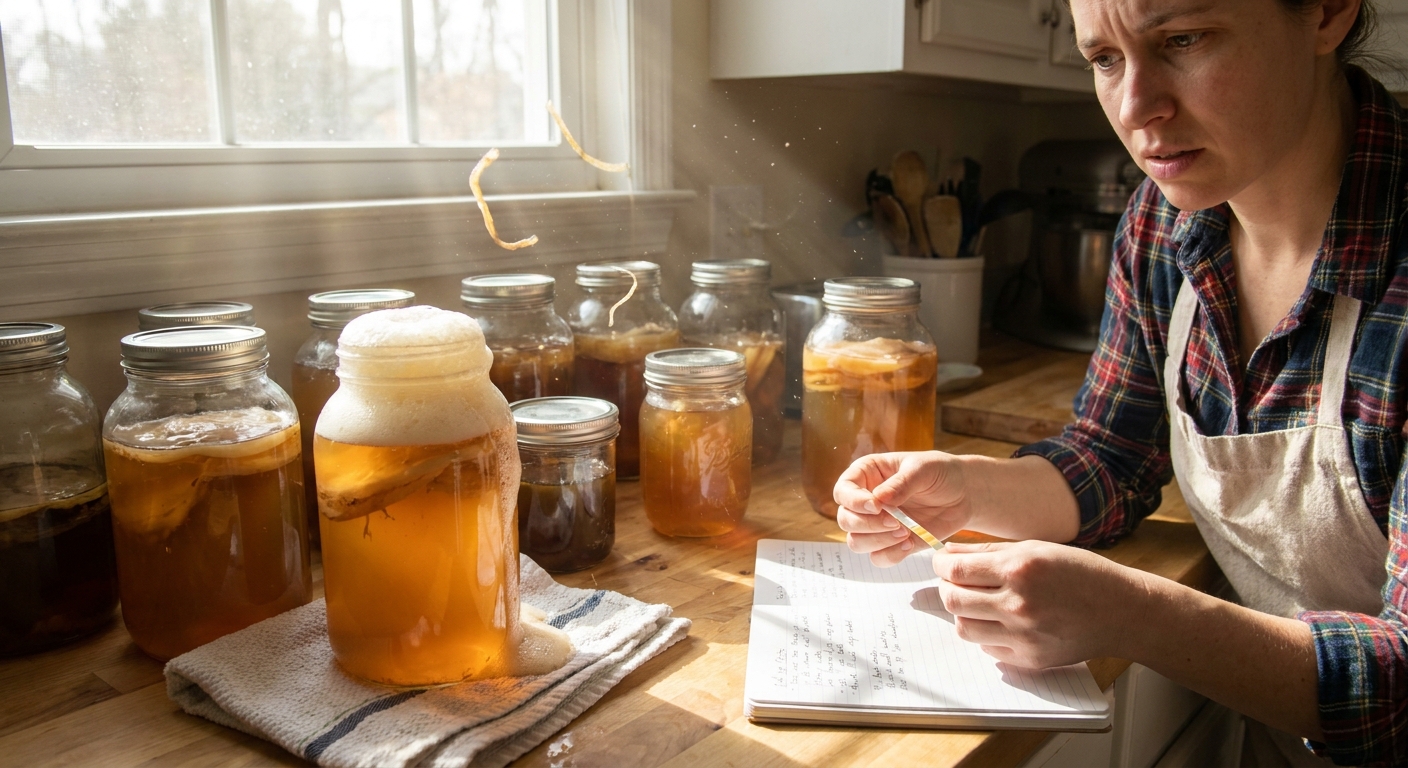
When Microbial Balance Tips the Wrong Way
Sometimes conditions favor one group too much.
Yeast-Heavy Ferments
Signs:
- Overly yeasty smell and flavor
- Lots of stringy brown sediment
- Very fizzy or explosive bottles
- Warm temps
- Excess sugar
- Limited oxygen circulation
- Yeasts outcompete bacteria, producing more alcohol and CO₂ than the bacteria can keep up with.
- Stir the brew gently before bottling to redistribute yeast.
- Give your SCOBY a quick rinse in kombucha (not water) between batches.
- Leave some yeast sediment behind when transferring to a new batch.
Why:
Microbiology:
Hands-on adjustments:
Bacteria-Heavy Ferments
Signs:
- Very sour very quickly
- Thicker-than-usual SCOBY
- Low carbonation, even with decent sugar
- Longer ferments
- Slightly higher oxygen access
- Temperatures in upper 20s°C / low 80s°F
- Acetic acid bacteria thrive, rapidly converting ethanol to acetic acid.
- Shorten first ferment.
- Reduce oxygen exposure (secure cover, don’t disturb SCOBY often).
Why:
Microbiology:
Hands-on adjustments:
pH, Safety, and What “Acidic Enough” Means
A healthy kombucha will generally reach a pH around 2.5–3.5 by the time it tastes properly tart.
Why this matters:
- Low pH (acidic environment) makes it hard for harmful microbes to survive.
- Starter tea’s job is to lower pH quickly at the beginning, giving your SCOBY team home-field advantage.
- Always use enough starter tea (10–20%).
- Avoid extremely long early ferments in cold rooms, where pH may stay higher for too long.
You don’t need to obsessively measure pH, but you should:
Practical Microbiology: How to Nudge Your Brew on Purpose
To Make Kombucha More Tart and Vinegary
You’re favoring acetic acid bacteria:
- Slightly warmer location
- Longer first ferment
- Use strong, mature starter tea
To Keep Kombucha Milder and Sweeter
You’re limiting bacterial acid buildup:
- Bottle earlier (day 5–7 in warm rooms)
- Cooler spot in your home
- Slightly lower starter tea percentage (but not below ~10%)
To Encourage Better Fizz
You’re supporting yeasts during second ferment:
- Bottle with some sweetness left
- Add a measured amount of sugar/fruit
- Keep bottles at room temperature for 2–4 days before chilling
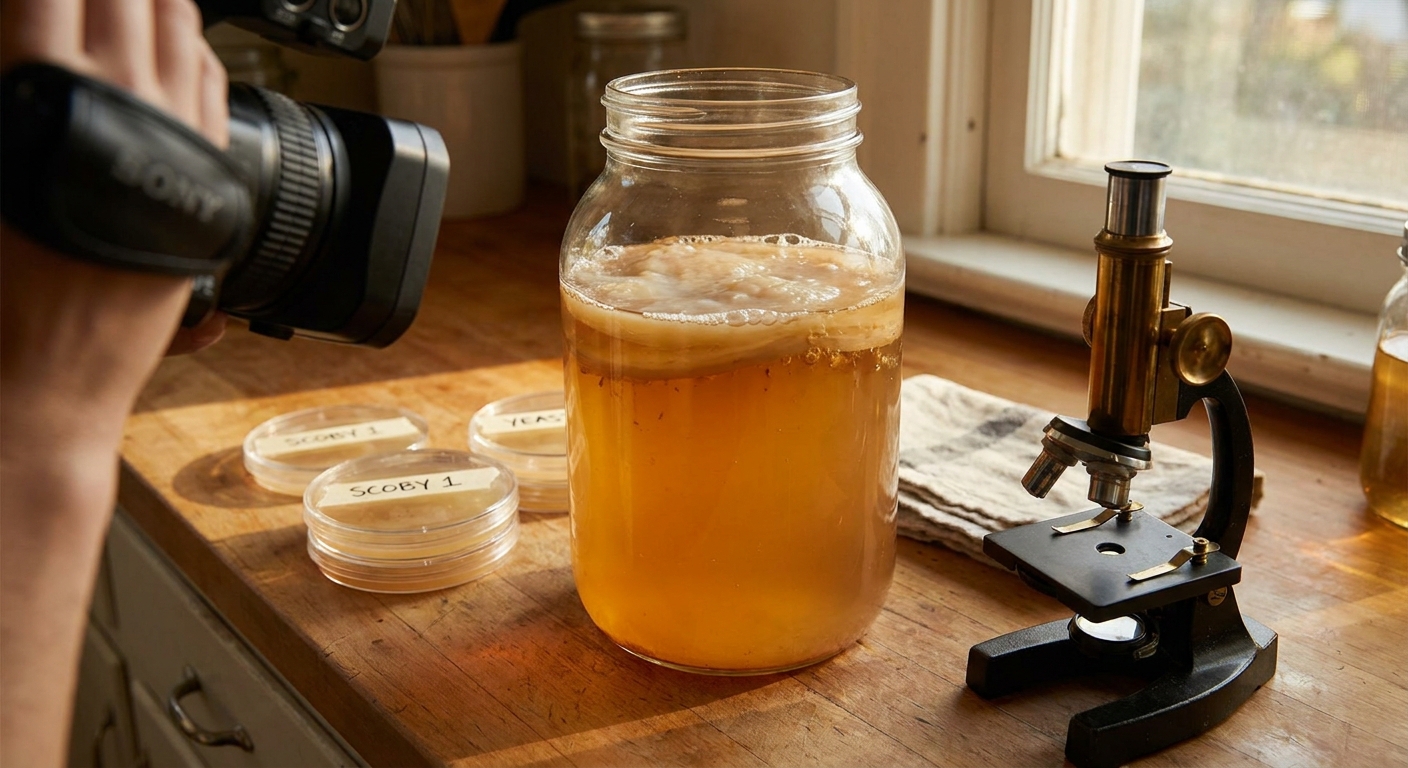
Viewing Your Jar Like a Scientist (Without a Lab)
You already have the main tools you need:
- Your eyes:
Watch SCOBY thickness, yeast strands, clarity.
- Your nose:
Learn the difference between pleasant vinegar-fruit-yeast notes and true off-odors.
- Your tongue:
Taste small samples over time; feel how sweetness, acidity, and body evolve.
- A notebook:
Note sugar amounts, tea types, temperatures, and tasting dates.
With each batch, link what you observe to what’s happening microbially:
- Strong tea + warm room = faster bacterial acid production.
- High sugar + warm room + long second ferment = more yeast activity and fizz.
Bringing It All Together
Kombucha isn’t magic; it’s a carefully choreographed community effort:
- Yeasts split and ferment sugars → alcohol + CO₂.
- Bacteria transform alcohol → organic acids + cellulose.
- You, the brewer, control their world: temperature, sugar, tea, and time.
The more you understand the lives of your microbes, the more confidently you’ll tweak recipes, rescue odd batches, and design flavors. You’re not just making a drink—you’re managing a microscopic ecosystem in a jar, and with a bit of patient observation, you’ll get to know it as well as any garden or sourdough starter.