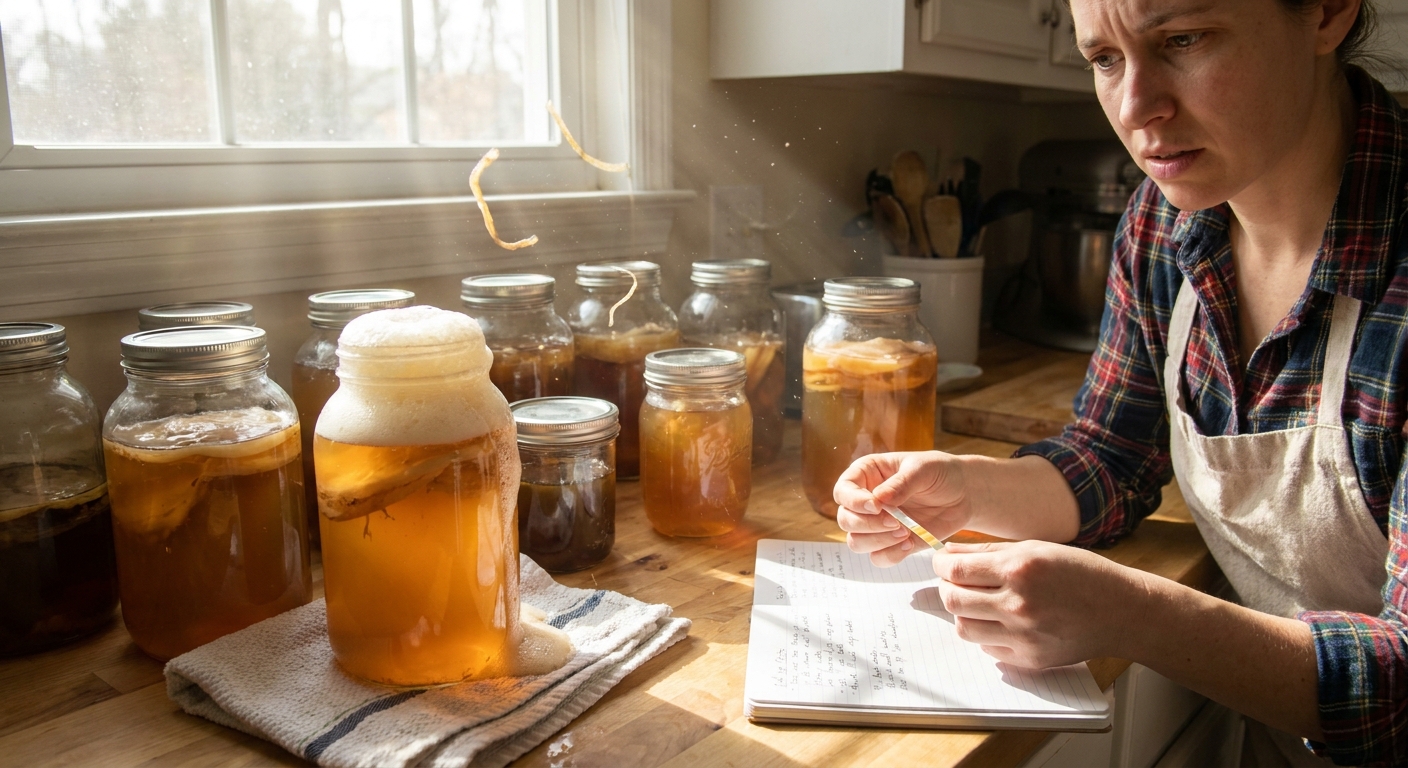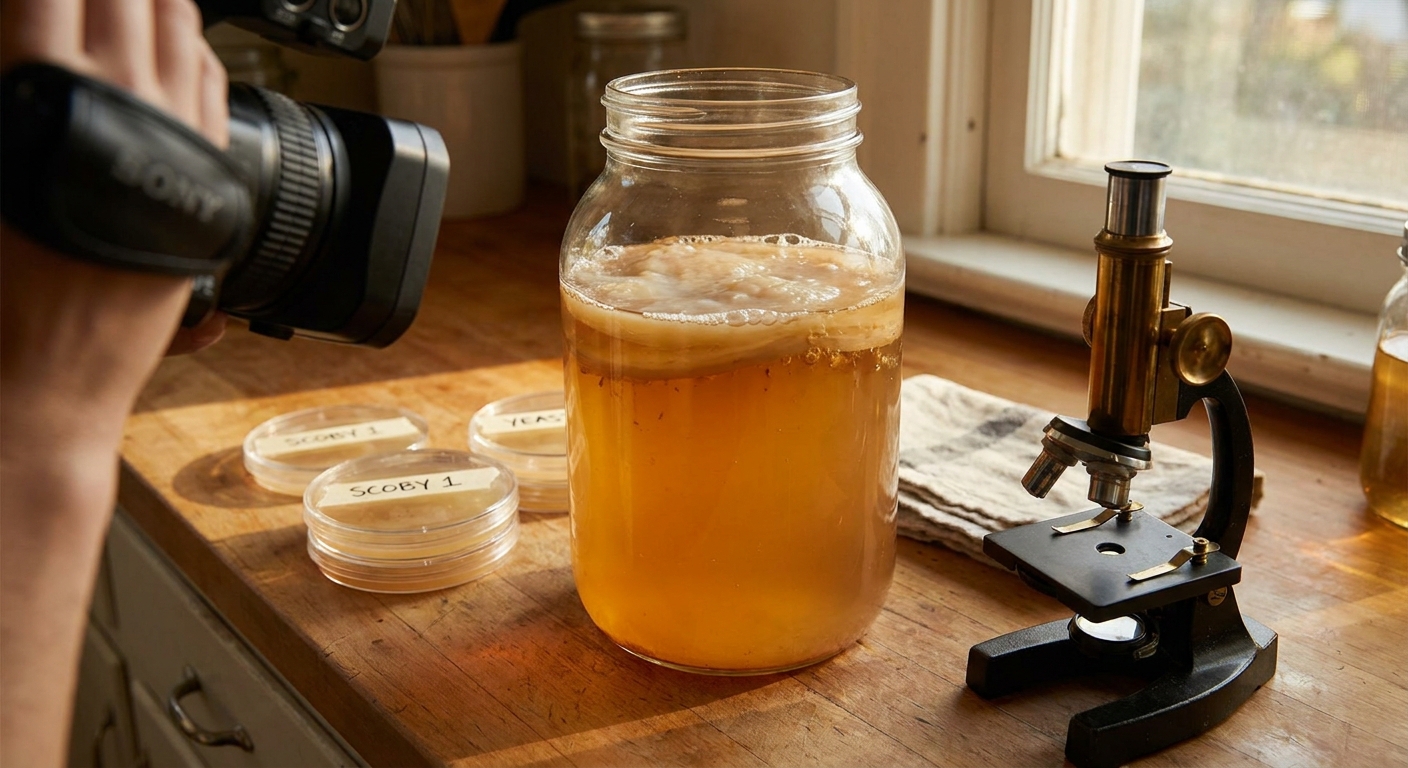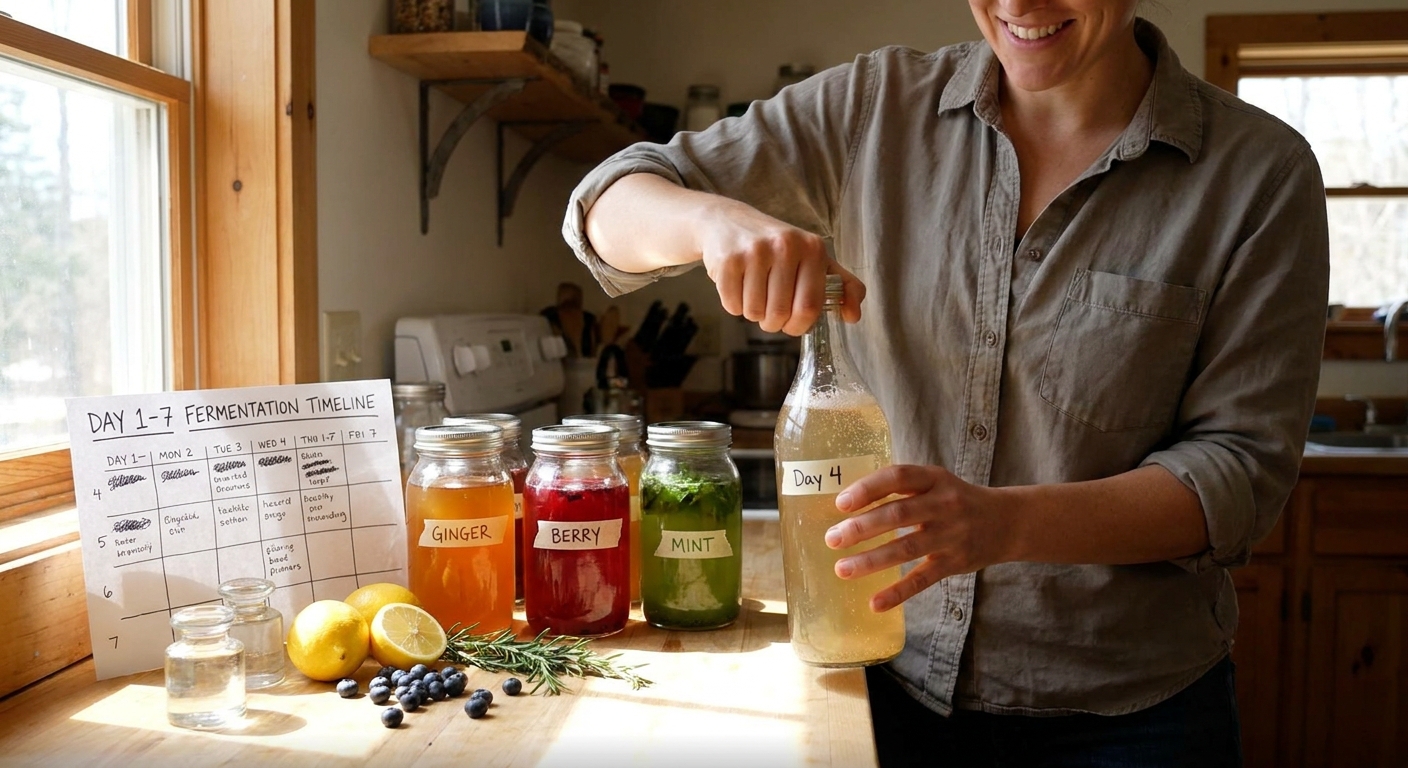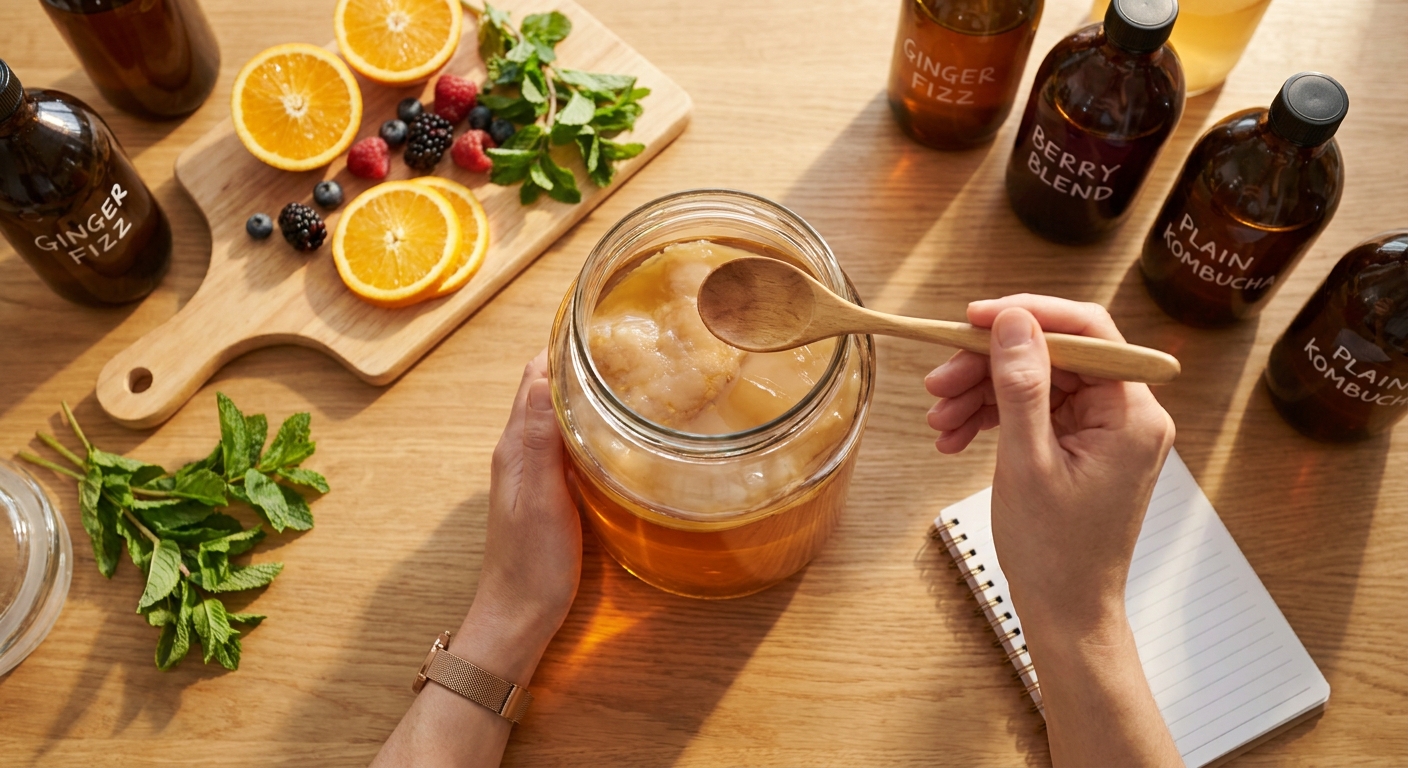
If you can boil water and wait patiently, you can make kombucha. This guide walks you through every step—from your first sweet tea to fizzy, flavored bottles—while explaining what’s happening microbially at each stage. Think of me as the fermentation‑obsessed friend in your kitchen, nudging you along and troubleshooting when things get weird.
Introduction
What Kombucha Actually Is (In Plain English)
Kombucha is sweetened tea fermented by a SCOBY—a Symbiotic Culture Of Bacteria and Yeast.
Inside that jelly-like disc and the liquid starter are:
- Yeasts (often Saccharomyces, Zygosaccharomyces, Brettanomyces):
- Eat sugar
- Produce alcohol and CO₂
- Bacteria (often Acetobacter, Gluconacetobacter, Komagataeibacter):
- Eat the alcohol
- Produce acetic acid, gluconic acid, and cellulose (the SCOBY itself)
Over 7–14 days, they work together to turn sweet tea into a tart, lightly acidic, sparkling drink.
Equipment and Ingredients You Really Need
You don’t need a fancy setup. You do need:
Equipment
- 1 large glass jar (3–4 L / 1 gallon)
- Tightly woven cloth or paper towel + rubber band
- Non-metal stirring utensil
- Measuring cups/spoons
- Medium saucepan
- Funnel and strainer (for bottling)
- 6–8 pressure-safe bottles with sealing caps (swing-tops or reused soda bottles)
- 3 L (about 3 quarts) water
- 6–8 black or green tea bags (or 2–3 tbsp loose tea)
- 200–250 g white sugar (1–1¼ cups)
- 250–350 ml raw, unflavored starter kombucha (from a friend, store-bought, or a starter kit)
- 1 healthy SCOBY
Ingredients
Why white sugar?
Your microbes don’t want a wellness challenge; they want easily digestible sucrose. Brown sugar, honey, or alternative sweeteners can stress the culture. Start simple, experiment later.
Step 1: Brew the Sweet Tea Base
Time: 30–40 minutes (mostly cooling)
Boil the water
Bring about 1 L (1 quart) to a boil. Reserve the rest as cool water.
Dissolve the sugar
Add sugar to the hot water and stir until completely dissolved.
Steep the tea
Add tea bags or loose tea. Steep 10–15 minutes for robust flavor. Remove tea so it doesn’t get bitter.
Cool to lukewarm
Add your remaining cool water to bring the total volume to about 3 L. Let the sweet tea cool to room temperature (20–25°C / 68–77°F).
Microbiology moment: Temperatures above ~30°C (86°F) can stress or kill your SCOBY microbes. Too cold and they nap. Room temp is their sweet spot.
Step 2: Build the First Ferment
Time: 7–14 days of mostly waiting
Transfer sweet tea to the jar
Pour the cooled sweet tea into your clean glass jar.
Add starter tea
Pour in your 250–350 ml of unflavored kombucha. This lowers the pH quickly (ideal: below 4.5, often ~3–4), which discourages mold.
Add the SCOBY
Gently slide it on top. It may sink, float, or tilt—all normal. A new SCOBY will form at the surface.
Cover and secure
Cover the jar with a clean cloth or paper towel and secure it with a rubber band. You want air in, dust and fruit flies out.
Ferment undisturbed
Place the jar in a warm (21–27°C / 70–80°F), dark or shaded spot, away from direct sunlight and strong odors.
Step 3: Timing and Tasting the First Ferment
Day-by-day expectations (approximate):
- Days 1–2:
Very sweet, not much tang. A thin, creamy film may appear on top (this is your new SCOBY forming).
- Days 3–5:
Slightly tangy, still sweet. Sweetness fading. Aroma light but changing.
- Days 6–8:
Noticeably tart, light vinegar note. Good for most drinkers.
- Days 9–14:
Increasingly sour, like mild apple cider vinegar. Less sugar. Great for those wanting low sweetness.
How to taste safely:
- With clean hands, gently lift the cloth.
- Insert a clean straw at the edge, plug one end with your finger, and pull out a sample.
- Taste. When the balance of sweet/tart suits you, you’re ready.
If you like a sweeter final drink, stop earlier. If you prefer very tart, let it go longer—but be careful not to starve your culture by repeatedly pushing ferments past 14–21 days.
Step 4: The Second Ferment for Fizz and Flavor
Now we trap the CO₂ to make it bubbly.
You’ll need:
- Clean bottles (pressure-capable)
- Funnel and optional strainer
- Flavorings (some options below)
Flavoring Ideas (Per 500 ml / 16 oz Bottle)
- 50–80 g chopped fruit (berries, mango, peach)
- 2–3 tbsp fruit juice
- 1–2 tsp grated ginger + 1 tsp sugar
- 2–3 tsp lemon or lime juice + herbs (mint, basil)
Note: Anything with sugar will feed the yeast and increase carbonation.
Bottling Steps
Reserve starter
Before bottling, pour off 250–350 ml of plain kombucha plus the SCOBY into a clean jar. This becomes your starter for the next batch.
Prepare flavorings
Add chosen fruit, juice, or herbs directly to each bottle.
Fill bottles
Using a funnel, fill bottles with kombucha, leaving about 2–3 cm (1 inch) headspace.
Seal and store
Cap tightly. Leave bottles at room temperature for 1–5 days to carbonate.
Burp if needed
For glass bottles, open briefly once daily to release pressure, then recap.
Refrigerate
When adequately fizzy, move bottles to the fridge to slow fermentation.
Simple Fermentation Timelines by Temperature
- Cool room (18–20°C / 64–68°F)
- First ferment: 10–18 days
- Second ferment: 3–7 days
- Moderate warm (21–24°C / 70–75°F)
- First ferment: 7–12 days
- Second ferment: 2–4 days
- Warm (25–27°C / 77–80°F)
- First ferment: 5–8 days
- Second ferment: 1–3 days
Trust your taste more than the calendar.
Troubleshooting Common Kombucha Problems
1. Mold: The Big One
Looks like: Fuzzy, raised, dry patches. Often blue, green, black, or pure white with a distinct circular edge.
If you see this:
- Do not scrape it off and continue.
- Discard EVERYTHING: liquid, SCOBY, jar cover.
- Clean jar thoroughly with hot soapy water, rinse well, and restart with fresh SCOBY and starter.
- Always use enough starter tea.
- Keep the jar warm enough (>20°C / 68°F) and away from dusty areas.
- Don’t ferment near bread yeast or other active ferments.
Prevention:
2. No Fizz
Possible causes and fixes:
- Too cold:
Move second ferment bottles to a warmer spot. Give them another 2–3 days.
- Too sour, not enough sugar left:
Your first ferment went very long. Next time, bottle earlier, or add a bit more sugary flavoring.
- Leaky caps:
Ensure bottle caps seal fully. Test by shaking with water; no bubbles should escape.
3. Kombucha is Too Sweet
- Extend the first ferment by 1–3 days.
- Use less sugary flavorings in the second ferment.
4. Kombucha is Too Sour
- Shorten the first ferment next time.
- Use extra sweet flavorings or dilute with a bit of fresh juice or water when serving.
- Use very sour kombucha as a vinegar replacement in dressings.
5. Strange Smells
- Normal: Apple cider vinegar-like, fruity, yeasty, or slightly sharp.
- Not normal: Rot, cheese, meat, or moldy basement. If in doubt, throw it out.
Caring for Your SCOBY Between Batches
- Keep SCOBY in enough kombucha to cover it fully.
- Store at room temperature, covered with cloth, just like during a regular ferment.
- If taking a long break, you can create a SCOBY hotel: multiple SCOBYs stacked in a jar of kombucha. Top up with freshly fermented booch every few weeks.
Microbiology note: The cellulose mat (SCOBY) is a home built by acetic acid bacteria. The real action is in the liquid—that’s where the highest density of microbes live, which is why starter tea is as important as the SCOBY itself.
Building Confidence: Your First Three Batches
- Batch 1: Focus on the process. Take notes: room temperature, days fermenting, taste.
- Batch 2: Adjust timing based on what you liked or didn’t. Try 1–2 simple flavors.
- Batch 3: Dial in your favorite sweetness/tartness window and experiment with more creative flavors.
In a few weeks, you’ll stop asking, “Is this right?” and start saying, “This batch is going to be extra gingery and perfect by Thursday.” That’s when you know you’ve become a kombucha fermenter, not just a recipe follower.
Stay curious, take notes, and remember: the microbes are doing the heavy lifting—you’re just giving them a good home.