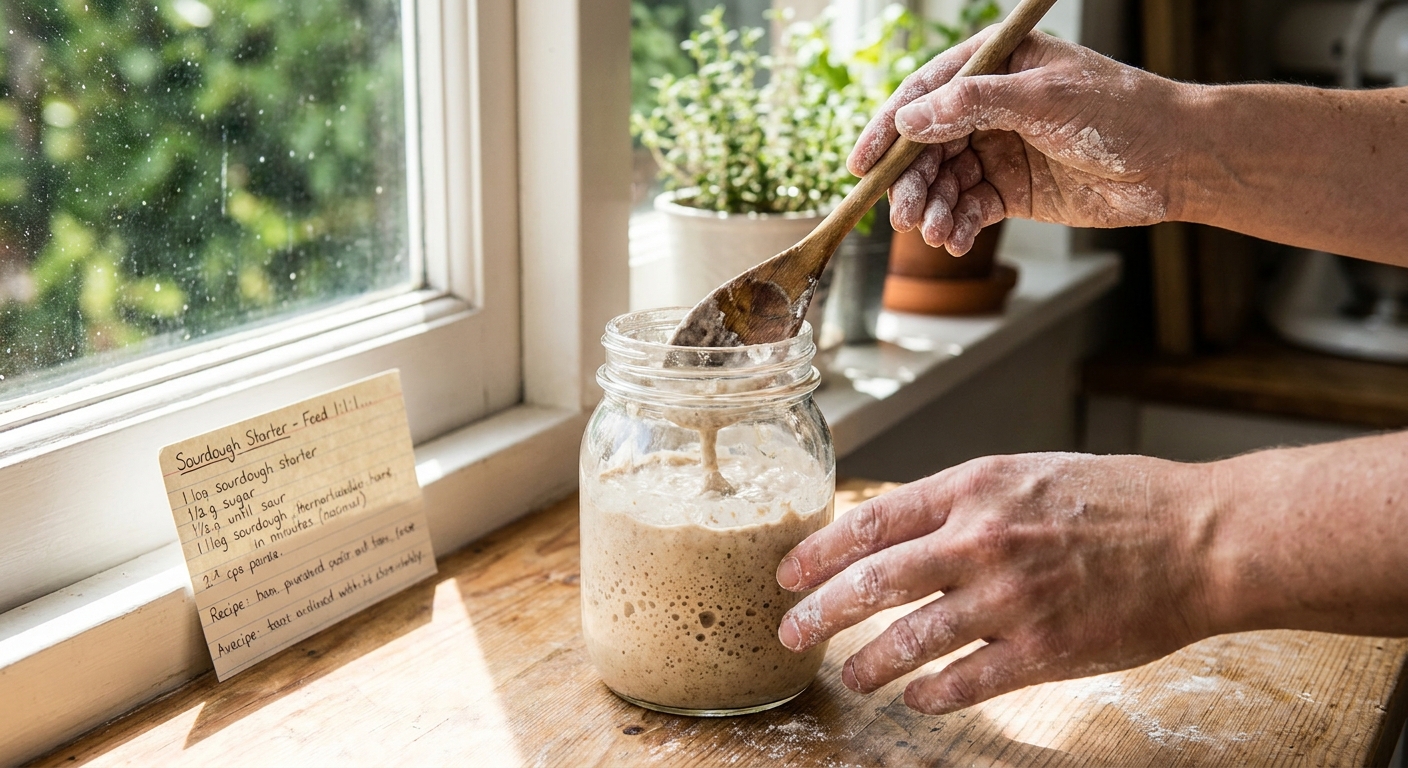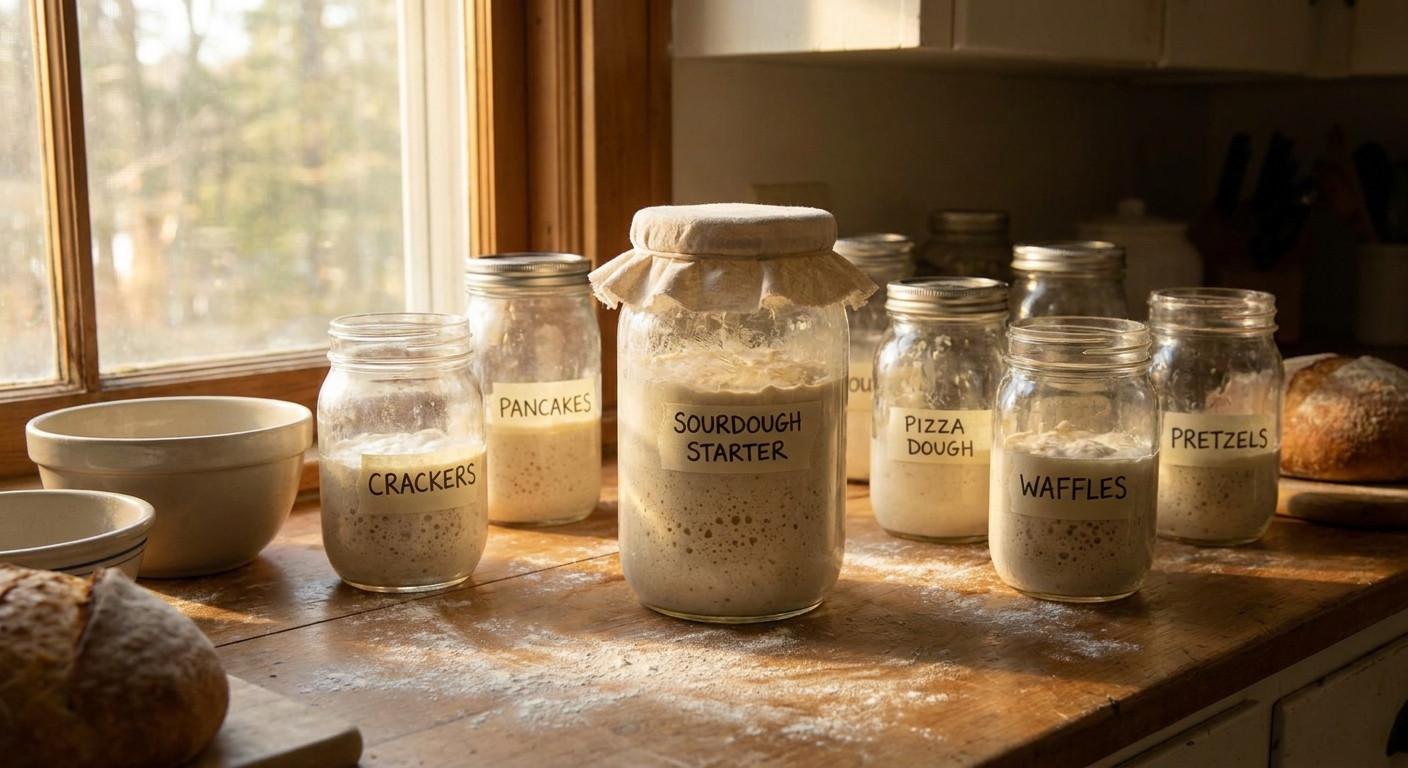
Your sourdough starter isn’t just a bread tool; it’s a living culture of wild yeast and lactic acid bacteria (LAB) that can power all kinds of kitchen ferments.
The Starter as a Versatile Fermentation Culture
In this guide, we’ll explore five practical, low‑stress recipes that use starter as a microbial “kick‑off”: pancakes, crackers, pizza dough, quick skillet flatbreads, and tangy waffles. For each, we’ll walk through timing, steps, and what the microbes are doing.
Most of these use discard—the portion of starter you’d normally throw out—so you can reduce waste while expanding your fermentation skills.
Note: All recipes assume a 100% hydration starter (equal parts flour and water by weight).
1. Sourdough Discard Pancakes (Same‑Day)
Why This Works
Your discard contains active (though sometimes sleepy) yeasts and LAB. Even in a short ferment, LAB start producing acids that add gentle tang and help tenderize the batter.
Ingredients (2–3 servings)
- 150 g sourdough discard
- 75 g milk or non‑dairy milk
- 1 egg
- 15 g sugar (1 tbsp)
- 15 g melted butter or oil (1 tbsp)
- 75 g flour (all‑purpose)
- 4 g baking powder (1 tsp)
- 2 g salt (generous pinch)
Steps
Mix wet ingredients
In a bowl, combine discard, milk, egg, and melted butter. Whisk smooth.
Add dry ingredients
In another bowl, mix flour, sugar, baking powder, and salt. Stir into wet until just combined.
Rest 10–15 minutes
Let the batter sit at room temp.
- Enzymes and LAB gently work on flour, improving flavor and tenderness.
- Cook on a medium‑hot skillet, greased lightly. Bubbles on top and dry edges signal it’s time to flip.
Fermentation Notes
- Because of baking powder, this is a hybrid ferment: wild cultures add flavor while chemical leavening guarantees rise.
- For more tang, mix the batter and rest it 1–2 hours before cooking.
2. Long‑Ferment Sourdough Waffles (Overnight)
Why This Works
An overnight rest lets LAB generate lactic acid, giving a yogurty tang, and yeasts add subtle aroma. The long fermentation also improves digestibility by pre‑breaking down some starches.
Ingredients (4–5 waffles)
Night Before:
- 200 g sourdough starter (active or discard)
- 200 g milk or buttermilk
- 150 g flour (all‑purpose)
- 1 egg
- 30 g melted butter or oil (2 tbsp)
- 10–15 g sugar (2–3 tsp)
- 3 g salt (½ tsp)
- 4 g baking soda (¾ tsp)
Morning Of:
Timeline
Night, 9:00 PM – Mix Preferment
- Stir together starter, milk, and flour.
- Cover loosely and let sit at room temp 8–12 hours.
Microbiology: Yeasts and LAB multiply, producing gas (you’ll see bubbles) and acids that flavor the batter.
Morning, 7:00–9:00 AM – Finish Batter & Cook
- Beat egg, melted butter, sugar, and salt; fold into the bubbly mixture.
- Just before cooking, sprinkle baking soda over the top and fold in gently.
- Baking soda neutralizes some acid, producing a quick burst of CO₂ for extra lift.
- Cook in a preheated waffle iron until deep golden and crisp.
Tips
- If your kitchen is hot (>26°C / 79°F), shorten fermentation to 6–8 hours to avoid excessive sourness.
- For milder tang, ferment in a cooler room or use milk instead of buttermilk.
3. Sourdough Crackers (Low‑Hydration, Long Flavor)
Why This Works
Crackers are a low‑hydration ferment: there’s not enough water for a big yeast rise, but LAB still work slowly, adding complex savory notes.
Ingredients
- 150 g sourdough discard
- 60 g flour (all‑purpose or whole wheat)
- 30 g butter or olive oil
- 4 g salt (¾ tsp)
- Optional: dried herbs, seeds, or grated cheese
Steps
Make the dough
Mix discard, flour, salt, and butter/oil until a smooth, firm dough forms. Add a teaspoon of water if too dry.
Rest 2–12 hours
- For mild flavor, rest 2–3 hours at room temp. - For deeper tang, rest in the fridge overnight.
Even in the cold, LAB are gently active.
Roll thin
On parchment, roll to 1–2 mm thick. Thinner = crisper.
Top and cut
Brush with a bit of oil or water; sprinkle seeds or herbs if using. Score into squares.
- Bake at 180°C (355°F) for 18–25 minutes, until evenly golden.
- Cool completely for maximum crunch.
Microbiology Snapshot
The lower water content slows yeast, but LAB don’t stop completely. They still acidify and break down some proteins and starches, concentrating flavor even in this dense format.
4. Simple Same‑Day Sourdough Pizza Dough
Why This Works
Pizza dough benefits from both yeast activity (rise, bubbles) and LAB acids (flavor, extensibility). A 6–8 hour ferment hits a compromise between speed and taste.
Ingredients (2 Thin 10–12" Pizzas)
- 300 g flour (00 or bread flour)
- 210 g water (70% hydration)
- 60 g active sourdough starter
- 6 g salt (1 tsp)
- 10 g olive oil (optional, 2 tsp)
Timeline
9:00 AM – Mix Dough
- Stir starter into water until mostly dispersed.
- Add flour and mix to a shaggy mass. Rest 20–30 minutes (autolyse).
- Add salt (and oil if using), then mix or knead until smooth.
9:30–1:30 PM – Bulk Fermentation (4 Hours)
- Keep at 24–26°C (75–79°F).
- Do 2–3 rounds of stretch‑and‑fold in the first 90 minutes.
1:30 PM – Divide and Ball
- Divide into two pieces.
- Shape each into a tight ball on a lightly floured surface.
- Place in lightly oiled containers, cover, and rest 2–3 hours.
4:00–5:00 PM – Bake
- Preheat oven with stone or steel to its highest setting for at least 30 minutes.
- Gently stretch dough balls into rounds.
- Top lightly and bake until blistered and browned.
Fermentation Notes
- A same‑day schedule favors yeast more than LAB; you’ll get some tang but mainly aromatic complexity.
- For more flavor, cold‑retard the dough balls in the fridge overnight after balling, then bring to room temp before baking.
5. Quick Sourdough Skillet Flatbreads
Why This Works
These flatbreads give you a fast, forgiving way to use discard. Yeasts and LAB don’t have much time to act, but they still contribute tenderness and mild tang.
Ingredients (6–8 Flatbreads)
- 200 g sourdough discard
- 150 g flour
- 60–80 g water (adjust for soft dough)
- 6 g salt (1 tsp)
- 15 g olive oil (1 tbsp)
Steps
Mix dough
Combine discard, flour, 60 g water, salt, and oil. Adjust with more water if needed to form a soft but not sticky dough.
Rest 30–60 minutes
Cover and let sit at room temp.
- Gluten relaxes, making rolling easier.
- LAB start mild acid production, but this is more of a gluten rest than a real ferment.
- Cook on a hot dry skillet 1–2 minutes per side until blistered and browned.
Portion and roll
Divide into 6–8 balls. Roll each to 2–3 mm thick.
Variations
- Brush with garlic butter or ghee after cooking.
- Use half whole wheat flour for more chew and flavor.
Safety and Storage Considerations
- All these recipes bake or cook the dough, so you’re not eating live cultures directly; you’re enjoying their byproducts (flavor, acids, gas).
- Leftover pancakes, waffles, and flatbreads can be cooled, then refrigerated or frozen and reheated.
Understanding the Microbial Workload
Across all these recipes, think in terms of time, temperature, and hydration:
- Time: More time = more flavor (up to a point).
- Temperature: Warm favors yeast speed and lactic acid; cooler and longer favors acetic acid.
- Hydration: Wetter doughs ferment faster; drier doughs slowly concentrate flavor.
By watching how your starter performs in these simpler ferments, you refine your feel for its behavior—making you more confident when you step back into bread.
Your sourdough starter is a small, friendly fermentation engine. Bread is just the beginning.